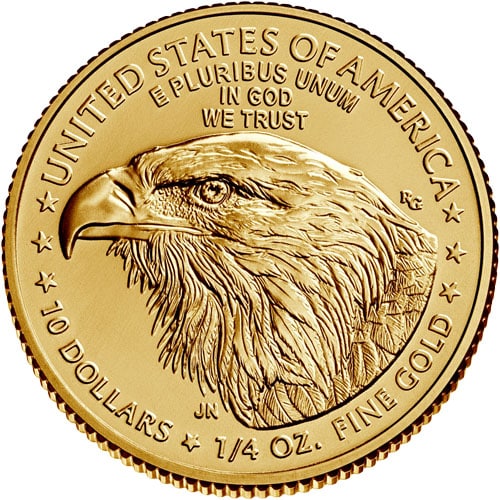


Gold had a split-personality week. A debt-and-debasement rally pushed it to a fresh three-month high near $4,653 Tuesday. Then the Fed took some of it back — a hotter PCE print started the slide Wednesday, and Fed Chair Warsh sealed it Friday, naming inflation, not the cooling labor market, as his real worry. Gold dropped below $4,600; silver fell even harder. Next week, the labor market gets its turn to talk back: ISM and JOLTS Tuesday, ADP Wednesday, and Friday's jobs report — the first real test of whether July's shock negative payroll print was a fluke or the start of something the Fed can't out-talk.
🟡 Monday (8.24.26): Gold $4,648.40 · Silver $68.75. Gold's fiscal-risk bid held even as silver saw profit-taking after last week's breakout — softer recent inflation and spending data eased September hike urgency, but long-end yields and debt concerns kept gold's bid alive above $4,600. Moral: gold's found a new reason to stay elevated, and it isn't waiting on the Fed anymore.
🔵 Tuesday (8.25.26): Gold $4,653.40 · Silver $68.47. Gold edged only slightly higher as weak consumer confidence and a sharp drop in new home sales pulled yields down, but a roughly 7% five-day run left the metal digesting gains through profit-taking rather than extending them — even as the Treasury's decision to double long-bond buybacks, against a backdrop of $40 trillion in debt, kept the fiscal-sustainability story front and center. Moral: even a supportive data day can look quiet after a move this big.
🟢 Wednesday (8.26.26): Gold $4,591.70 · Silver $68.00. The rally hit its first real air pocket as hotter-than-expected July PCE inflation (3.7% annual, above the 3.6% forecast) lifted yields and the dollar, forcing broad profit-taking ahead of Friday's Jackson Hole speech — gold's failure to hold the $4,630-$4,650 zone showed the trade has become more sensitive to inflation surprises than to fiscal-risk hedging alone. Moral: after two weeks of debt and debasement headlines doing the heavy lifting, one hot inflation print reminded everyone the Fed still has a vote.
🟣 Thursday (8.27.26): Gold $4,622.83 · Silver $68.95. Gold eased for a second straight session while silver actually edged higher, a divergence that shows the two metals reacting to slightly different pressures — weekly jobless claims fell to 203,000, below consensus, keeping the labor market too firm to hand gold a clean rate-relief trade, while markets braced for Fed Chair Warsh's Friday Jackson Hole speech as the real catalyst still to come. Moral: gold's still waiting on the Fed to blink; silver's just getting on with its own thing.
🟠 Friday (8.28.26): Gold $4,552.00 · Silver $66.51 (mid-day recap, down 1%+ and ~3.5% respectively)
Fed Chair Warsh delivered his first Jackson Hole keynote with a distinctly hawkish tone, calling inflation — not the cooling labor market — his bigger concern, citing PCE readings of 3.7% (12-month) and 4.1% (6-month). Gold broke below $4,600 and silver fell even harder, with precious metals miners cratering within minutes of the speech as markets repriced meaningfully higher odds of a September hike. Moral: after weeks of debt, debasement, and de-dollarization doing the heavy lifting, one Fed speech reminded everyone who still has the final word.
The National Debt Just Crossed $40 Trillion
The big picture
The U.S. national debt passed $40 trillion this week, a milestone that took just five months to arrive after crossing $39 trillion in March — and it barely made a dent in markets.
Driving the news
- The debt has doubled in just 10 years, from roughly $20 trillion in August 2016 to $40 trillion now — about $117,000 per American.
- Annual interest costs on the debt have topped $1 trillion for the first time, now exceeding what the U.S. spends on national defense.
- Roughly 23% of total debt is foreign-held, with Japan, the U.K., and China together holding about $2.71 trillion — though China's share has fallen to its lowest level since 2008.
- On the current trajectory, the Peter G. Peterson Foundation projects $50 trillion within six years.
Why it matters
Investors still show strong demand for U.S. debt, but they're increasingly requiring a higher premium for long-duration bonds — a sign of eroding confidence in Washington's fiscal trajectory, which is precisely the dynamic gold bulls point to as a structural tailwind.
What to watch
Whether rising interest costs continue crowding out other spending, and whether foreign buyers keep rotating away from U.S. debt the way China has over the past several years.
The bottom line
Moral: $40 trillion barely made headlines for more than a day — which says something about how normalized this level of debt has become.
Take Away the Government Checks, and Real Income Is Shrinking
The big picture
Strip out Social Security, Medicare, and other transfer payments, and the average American's real income has actually declined over the past year — even as spending keeps climbing.
Driving the news
- Real personal income excluding government transfers fell 0.38% from a year ago.
- Real personal consumption expenditures, meanwhile, rose 2.14% over the same period.
- Headline real personal income (including transfers) was roughly flat, at -0.01%.
- The gap between rising spending and falling underlying income has persisted for three straight months.
Why it matters
The NBER — the official arbiter of U.S. recessions — specifically watches real income excluding transfers as a signal of underlying economic health, since it strips out the effect of government support checks. A negative reading here is a more honest read on how the private economy is actually doing.
What to watch
Whether this divergence between spending and underlying income continues widening, and whether it eventually shows up in weaker consumer spending data.
The bottom line
Moral: consumers are still spending like the economy's fine — the paycheck just isn't backing it up the way it used to.
UBS: Gold Could Hit $5,400 Within a Year on De-Dollarization Alone
The big picture
UBS says the "de-dollarization" trade — investors and countries diversifying away from the U.S. dollar — has reaccelerated this month, and gold is the clearest beneficiary.
Driving the news
- Gold has risen roughly 15% just this month, with UBS raising its 12-month price target to $5,400/oz.
- The U.S. Dollar Index has fallen 2.4% over the past month.
- China's central bank added 20 metric tons of gold to reserves in July, its largest monthly increase since October 2023.
- UBS also recommends exposure to the British pound, Norwegian krone, New Zealand dollar, and Chinese yuan as part of a broader diversification play.
Why it matters
UBS frames this as more than a trading rally — it's a structural repricing driven by concerns over the U.S. fiscal trajectory and trade policy uncertainty, the same forces cited in this week's debt and debasement stories.
What to watch
Whether the dollar's 2.4% monthly decline continues or stabilizes, and whether further Chinese central bank buying data confirms the accelerating pace.
The bottom line
Moral: when a bank's own currency strategists are recommending clients hedge against the dollar, the de-dollarization story has moved from theory to strategy.
The Fed Is Talking Tough on Inflation While Money Supply Grows Fastest Since COVID
The big picture
Fed Chair Warsh has built a reputation as an inflation hawk — but the actual money supply data tells a different story, growing faster now than at any point since the pandemic.
Driving the news
- M2 money supply grew $103 billion in July, following similar increases in June and a $256 billion May surge — the biggest monthly jump since 2021.
- The 13-week annualized growth rate sits in the high-5%/low-6% range, having touched 7% seven weeks ago.
- Current inflation sits at 3.3%, only 30 basis points below the Fed funds rate of 3.6% — nowhere near the deeply positive real rates that broke inflation in the Volcker era.
- Inflation has now stayed above the Fed's 2% target for five straight years.
Why it matters
Money supply growth has historically preceded inflation with roughly a two-year lag — meaning today's accelerating growth could be setting up inflation pressure well into 2027 and 2028, regardless of what the Fed says publicly.
What to watch
Whether Warsh addresses this disconnect directly at this week's Jackson Hole symposium, and whether money supply growth continues accelerating or levels off from its recent highs.
The bottom line
Moral: don't listen to what the Fed says about inflation — watch what the money supply is actually doing.
---
ECONOMIC CALENDAR
Monday, Aug. 31
No events scheduled.
Tuesday, Sep. 1
- 9:45 am — US Manufacturing PMI (Aug.) — prior: 53.9
- 10:00 am — ISM Report On Business Manufacturing PMI (Aug.) — prior: 55.6%
- 10:00 am — Job Openings & Labor Turnover Survey (JOLTS) (Jul.) — prior: 7.36M
Wednesday, Sep. 2
- 8:15 am — ADP National Employment Report (Aug.) — prior: 44K
Thursday, Sep. 3
- 8:30 am — Weekly Jobless Claims (Aug. 29) — prior: 203K
- 9:45 am — US Services PMI (Aug.) — prior: 54.6
- 10:00 am — ISM Report On Business Services PMI (Aug.) — prior: 54.1%
- 3:00 pm — Fed's Hammack and Goolsbee special remarks at "Connecting Communities" event
Friday, Sep. 4
- 8:30 am — Employment Situation Summary (Jobs Report) (Aug.) — prior: -23K (unemployment rate: 4.1%)
IMPACT ON PRECIOUS METALS MARKETS
US Manufacturing PMI (S&P Global)
- Reading rises = factory activity accelerating despite tariffs, oil, and shipping disruptions = mild headwind for gold.
- Reading falls further = manufacturing losing momentum = tailwind for metals.
The August flash reading already slipped to 53.2 from July's steady 53.9, undershooting expectations and marking the weakest pace since March — driven by higher fuel costs, reduced inventory building, and continued raw material shortages tied to Middle East shipping disruptions. This final print confirms whether that softening held. Low to moderate impact.
ISM Manufacturing PMI
- Reading rises = factory sentiment strengthening, less urgency for a dovish Fed = mild headwind for gold.
- Reading falls back toward 50 = manufacturing losing steam = tailwind for metals.
July's reading jumped to 55.6%, its highest since May 2022, with employment crossing into expansion for the first time in 33 months — a notably stronger read than the parallel S&P Global survey, which flagged softer momentum underneath. Whether August confirms ISM's strength or converges toward S&P's softer read is the key question here. Moderate impact.
JOLTS (Job Openings)
- Openings rise or hold steady = labor demand still resilient = mild headwind for gold.
- Openings fall meaningfully = hiring appetite cooling, labor slack building = tailwind for metals.
June openings slipped to 7.36 million from a revised 7.54 million in May, undershooting expectations, with the steepest declines in healthcare, leisure and hospitality, and wholesale trade. July's read is the next data point in a labor market that's been gradually softening since the weak July jobs report. Moderate impact.
ADP National Employment Report
- Reading beats expectations = private hiring reaccelerating = mild headwind for gold.
- Reading misses / stays soft = hiring pipeline continuing to weaken = tailwind for metals.
July's ADP print came in at just 44,000, down sharply from June's 95,000 and well below consensus — a soft signal that preceded the shock negative jobs report two days later. A similarly weak August print would reinforce the sense that hiring has genuinely stalled, not just had one bad month. Moderate to high impact — also functions as the Friday preview.
Weekly Jobless Claims
- Claims rising = labor cracks continuing to widen = good for metals.
- Claims falling back toward the low-200s or below = labor market stabilizing = mild drag on metals.
Claims have bounced around in a fairly narrow band recently — 209K, then 206K, then 203K for the week ending Aug. 22 — suggesting the labor market has leveled off rather than accelerating its slide after July's payroll shock. Confirmation of that stability, or a break from it, is the thing to watch. Moderate impact.
US Services PMI (S&P Global)
- Reading holds near recent highs = the dominant, consumer-facing part of the economy still expanding solidly = mild headwind for gold.
- Reading rolls over = growth engine losing steam now that seasonal tailwinds fade = tailwind for metals.
July's final reading hit a nine-month high of 54.6, though S&P Global flagged this as partly driven by temporary World Cup and seasonal spending. August's reading is the first real test of whether services growth holds without that boost. Moderate impact.
ISM Services PMI
- Reading holds above 54 = the dominant share of the economy still expanding solidly = mild headwind for gold.
- Reading drops toward 50 = broader economy losing its main growth engine = tailwind for metals.
July's reading ticked up to 54.1%, a 25th straight month of expansion, though the Employment Index fell back into contraction at 47.4% — a notable soft spot given the broader concerns about hiring. Moderate impact.
Jobs Report (August)
- Reading beats expectations = labor market stabilizing after July's shock = mild headwind for gold.
- Reading misses again / shows another decline = confirms July wasn't a one-off, cements the "labor market is cracking" case = strong tailwind for metals.
July's report was a genuine shock — payrolls fell by 23,000, the first negative print in years, pulling unemployment to 4.1% mostly on falling participation. With ADP, JOLTS, and claims all pointing toward continued softness heading into this release, a second weak or negative print would be the clearest signal yet that the labor market has turned, not just wobbled. This is the single highest-impact release of the week.