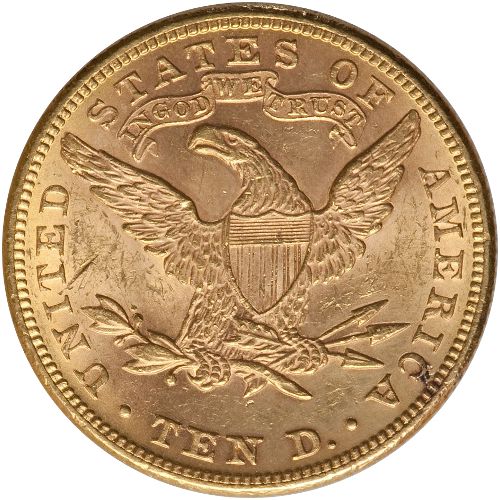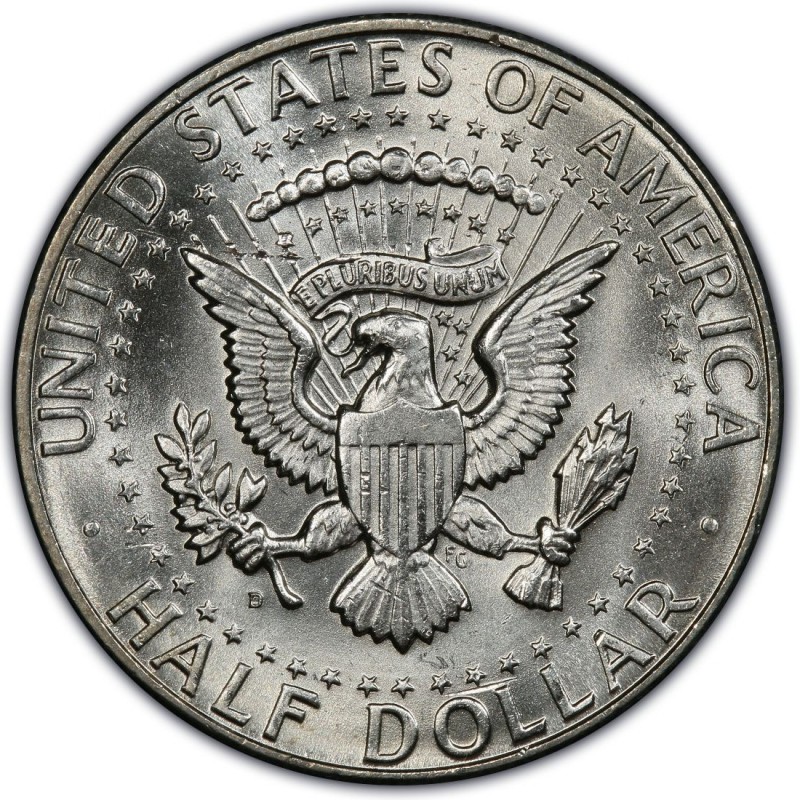


Precious metals surged into the first week of December as gold and silver rallied on growing expectations of global rate cuts, mounting economic uncertainty, and tightening physical supply. From gold’s six-week high to silver’s record-setting streak, the markets moved sharply as traders reacted to shifting sentiment, cooling inflation expectations, rising layoffs, and a wave of overseas easing signals. This week’s data and policy backdrop revealed a landscape in motion—one where volatility, caution, and opportunity are colliding across the economy.
🟡 Monday (12.01.25): Metals on a mission
Gold and silver blasted higher to start the week as global jitters sent traders rushing for safety. Gold tagged a six-week high at $4,270.20, while silver tore into record territory near $59.22, briefly kissing $59.30. Add in rising buzz around future U.S. rate cuts, and it was full-on “buy the metals” mode.
🔵 Tuesday (12.02.25): Profit-taking hits pause
After Monday’s fireworks, traders took some chips off the table. Gold cooled to $4,219.90, and silver slipped to $58.37 as risk appetite improved and some safe-haven demand faded.
🟢 Wednesday (12.03.25): Bullish momentum reloads
Metals bounced back after a soft jobs report boosted rate-cut hopes. Gold climbed to $4,250.80, and silver surged to $59.06, staying just under the $60 mark while notching yet another record. With key data still delayed, traders leaned back into precious metals for safety and upside.
🟣 Thursday (12.04.25): Mixed metals, steady vibes
Gold inched higher to $4,240.00 on light technical buying, while silver cooled to $57.45 as traders locked in profits after a strong run. A drop in weekly jobless claims — the lowest in over three years — briefly leaned bearish for metals, but it didn’t shake expectations: the Fed is still widely seen cutting rates by a quarter-point next week.
🟠 Friday (12.05.25): Silver pops, gold grinds, global easing vibes
Gold ticked up to $4,266.90 while silver jumped to $58.62, riding bullish technicals and fresh long-side momentum. The big catalyst came from overseas: India’s central bank cut rates and signaled more easing, while China hinted it will keep policy loose as demand softens. With major economies tilting toward cheaper money—and the Fed expected to follow next week—traders stayed upbeat on metals, betting easier global policy will boost commodity demand.
—-------
Preliminary Consumer Sentiment Rises to 53.3 — Inflation Expectations Ease Into Year-End
The big picture
U.S. consumer sentiment improved modestly in early December, rising to 53.3 according to the University of Michigan’s preliminary survey. The reading beat economist expectations and November’s final figure, signaling slightly firmer household outlooks as both short- and long-term inflation expectations eased heading into year-end.
Driving the news
The 2.3-point uptick was concentrated among younger consumers, according to survey director Joanne Hsu. While the gain falls within the survey’s margin of error, it marks a modest improvement in expectations across age, income, education, and political groups. Gold prices initially spiked on the data but then pulled back from session highs, with spot gold last up 0.63% at $4,235.42/oz following the release.
By the numbers
• 53.3 — Preliminary Consumer Sentiment reading for December
• 52 — Economist consensus expectation
• 51 — November’s final sentiment reading
• 13% — Rise in expected personal finances from November
• 4.1% — Year-ahead inflation expectations (down from 4.5%)
• 3.2% — Long-run inflation expectations (down from 3.4%)
• 4 — Consecutive months of declining year-ahead inflation expectations
Why it matters
The report shows consumers are cautiously more optimistic about their financial outlook, even as they continue to grapple with persistent price pressure. Improvements in expected personal finances and slightly better labor market expectations suggest some easing in economic anxiety. But sentiment remains historically subdued, as high prices continue to shape household perceptions and inflation uncertainty stays elevated.
What to watch
Watch whether the improvement holds once the final December sentiment reading is released; whether inflation expectations continue drifting lower toward pre-pandemic norms; and whether consumer views on labor markets and personal finances strengthen enough to meaningfully shift the “broadly somber” outlook described by survey researchers.
The bottom line
Consumer sentiment is nudging higher, and inflation expectations are cooling on both short- and long-term horizons. But despite the uptick, Americans remain wary: price burdens are still heavy, labor confidence is fragile, and overall sentiment remains well below early-year levels.
US Layoffs Surge Past 1.1 Million — Highest Since the Pandemic
The big picture
U.S. layoffs have crossed 1.17 million in 2025 — the highest level since the pandemic-era shock of 2020. November’s job cuts fell sharply from October, but the year-to-date total surged 54% as employers across tech, telecom, retail, and food processing continue trimming headcount in a cooling economic environment.
Driving the news
November saw 71,321 layoffs — down 53% from October’s spike but still 24% higher than last year’s November and the second-highest November reading since 2022. Challenger, Gray & Christmas notes that hitting above 70,000 in November is rare, appearing only twice since 2008. Telecom led last month’s cuts with major layoffs at Verizon, while tech, retail, services, and food companies also posted steep increases.
By the numbers
• 71,321 — Layoffs announced in November
• 1,170,821 — Total layoffs YTD (+54% from 2024)
• 8 — Months this year with higher cuts than the same month in 2024
• 153,536 — Tech layoffs YTD (+17%)
• 38,035 — Telecom layoffs YTD (+268%)
• 91,954 — Retail layoffs YTD (+139%)
• 6th time since 1993 that YTD layoffs through November topped 1.1 million
Why it matters
Layoffs are broadening across industries, signaling a job market losing momentum even as official unemployment remains low. Rising cuts in labor-intensive and consumer-facing sectors show companies bracing for slower demand, margin pressures, and tariff-driven uncertainty heading into year-end.
What to watch
Watch whether telecom and tech continue leading the layoffs; whether consumer-sensitive sectors like retail and food processing accelerate cuts; and whether corporate caution spreads into Q1 amid tariff uncertainty, weaker hiring, and mounting recession fears.
The bottom line
Layoff announcements may be cooling month to month, but the cumulative story is unmistakable: U.S. employers are cutting jobs at the fastest pace since 2020, with multiple major sectors tightening simultaneously. The job market remains resilient on the surface — but the pressure is building underneath.
Silver Holds $58 — And Strategists Still See More Upside
The big picture
Silver is holding above $58 an ounce, and despite elevated prices and near-term volatility risk, analysts say the rally still has room to run as physical supply tightness and a supportive macro backdrop continue to drive demand.
Driving the news
Saxo Bank strategist Ole Hansen says silver’s rally is being driven by real-world supply tightness—not just hype. Stockpiling ahead of tariffs drained U.S. inventories earlier this year, London stockpiles were hit in October, and now China’s monitored silver supplies have fallen to decade lows. With tariff uncertainty still in play and speculators lightly positioned, the market is primed for continued upside.
By the numbers
• $58.17: Latest spot silver price.
• 100%+: Silver’s gain so far this year.
• Lowest in 10 years: Shanghai silver stockpiles.
• Since 1979: Best annual performance on record.
Why it matters
Tight physical supply, resilient industrial demand, and renewed investment flows are reinforcing each other—creating a feedback loop that keeps upward pressure on silver prices even at elevated levels.
What to watch
Watch whether physical stockpiles continue shrinking in China and London, how speculative positioning shifts as prices stay elevated, and whether tariff uncertainty starts to directly impact trade flows. At the macro level, falling interest rates and inflation hedging could further strengthen investment demand.
The bottom line
Silver’s rally is no longer just a technical breakout—it’s being driven by real-world supply stress, steady industrial demand, and a shifting rate environment. As long as physical tightness persists, the upside case remains firmly intact.
U.S. Business Bankruptcies Are Surging at a Relentless Pace
The big picture
Business failures across the U.S. are accelerating at a rate not seen since the Great Recession, signaling mounting stress on both small firms and large corporations—and flashing warning signs for jobs, wages, and economic stability heading into 2026.
Driving the news
Small-business bankruptcies under Subchapter V just hit a record, per Epiq Bankruptcy Analytics, while corporate failures are also climbing fast, according to S&P Global Market Intelligence. As companies go under, hiring is freezing—especially for new grads—while AI-driven job displacement flagged by Massachusetts Institute of Technology is tightening the labor market even further. Even laid-off tech workers from Meta are struggling to find their way back in.
By the numbers
• 2,200+: Subchapter V small-business bankruptcies filed this year.
• 446: Corporate bankruptcy filings through the first seven months of 2025.
• Since 2010: Worst seven-month stretch for corporate failures.
• 20 million: U.S. jobs AI could potentially automate.
• 51.6%: Gap between retail wages and what’s needed to afford a typical apartment.
Why it matters
Rising bankruptcies choke off hiring, accelerate layoffs, and weaken local economies. When combined with automation and falling affordability, the result is growing financial strain across the middle and working class—just as economic inequality hits new extremes.
What to watch
Watch whether bankruptcy filings continue climbing into 2026, how quickly layoffs begin to ripple through consumer spending, and whether AI-driven job displacement accelerates faster than new jobs are created. Wage-to-rent gaps, entry-level hiring trends, and credit stress will be key pressure gauges.
The bottom line
The U.S. economy is showing classic late-cycle stress signals: rising business failures, a freezing job market, and widening inequality. If these trends persist, 2026 could shape up to be far more turbulent than the headline economic data currently suggests.
Shoppers Are Spending More — But Getting Less This Holiday Season
The big picture
Black Friday and early Cyber Week sales look strong on the surface, but the underlying trend is clear: Americans are paying higher prices for fewer items as tariffs, inflation pressure, and uneven consumer spending reshape the holiday shopping season.
Driving the news
Early holiday sales looked strong on the surface, with Mastercard and Adobe Analytics showing solid gains—but Salesforce data says the boost is mostly from higher prices, not fuller carts. Tariff-driven price pressure—highlighted by The Budget Lab at Yale—hit import-heavy goods hardest, while shoppers waited for deeper discounts and the spending gap between high- and low-income households widened.
By the numbers
• 4.1%: Black Friday retail sales growth.
• 9.1%: Jump in online spending.
• 7%: Average rise in online prices during Cyber Week.
• 24%: Spike in Black Friday home-goods prices.
• $651: Planned holiday spending for households under $50,000.
• $1,479: Planned holiday spending for high-income households.
Why it matters
Stronger headline sales mask growing affordability stress. When prices rise faster than purchasing power, spending becomes increasingly dependent on higher-income consumers—leaving retailers more vulnerable if that group pulls back.
What to watch
Watch how aggressively retailers discount into the final stretch of December, whether tariff-driven price pressure continues to intensify, and how sharply lower- and middle-income spending diverges from upper-income shopping behavior. If deal-hunting becomes the dominant driver, margins could take a hit even as sales volumes hold up.
The bottom line
Holiday shopping is still alive—but it’s being propped up by higher prices, not bigger baskets. For many households, sticker shock hasn’t gone away, and the longer tariffs and inflation linger, the harder it becomes to sustain this season’s spending pace.
NEXT WEEK’S KEY EVENTS
Economic Calendar: December 8 – 12, 2025 (ET)
MONDAY, Dec. 8
• None scheduled
TUESDAY, Dec. 9
• 10:00 am — JOLTS (delayed report) (Oct.)
WEDNESDAY, Dec. 10
• 2:00 pm — FOMC Interest-Rate Decision
• 2:30 pm — Fed Chair Powell Press Conference
THURSDAY, Dec. 11
• 8:30 am — Initial Jobless Claims (Dec. 6)
FRIDAY, Dec. 12
• None scheduled
IMPACT ON PRECIOUS METALS MARKETS
JOLTS (Tue, 10:00 am ET)
• High job openings → persistent labor tightness, supports higher-for-longer rates; bearish for metals.
• Falling job openings → cooling labor demand, supports rate-cut expectations; bullish for gold/silver.
Subject to delay.
FOMC Interest-Rate Decision (Wed, 2:00 pm ET)
• Hawkish hold or rate hike → yields and dollar strengthen; bearish for metals.
• Dovish hold or rate cut → easing financial conditions; bullish for gold/silver.
Subject to delay.
Fed Chair Powell Press Conference (Wed, 2:30 pm ET)
• Hawkish tone → reinforces inflation-fighting stance, supports yields/dollar; bearish for metals.
• Dovish tone → signals policy flexibility and future easing; bullish for gold/silver.
Subject to delay.
Initial Jobless Claims (Thu, 8:30 am ET)
• Rising claims → labor-market softening, easing rate pressure; bullish for gold/silver.
• Falling claims → labor resilience, reinforces higher-for-longer bias; bearish for metals.
Subject to delay.