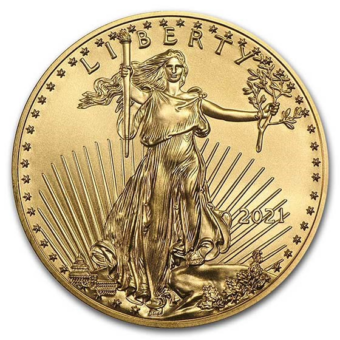


Monday (3.30.26): Gold and silver edged higher midday as safe-haven demand picked up amid ongoing Middle East tensions, with gold gaining about $36 to around $4,652 and silver up roughly $1.24 near $71. Tailwinds included rising oil prices and lower global bond yields, reinforcing the metals bid, while Fed commentary barely moved markets as policymakers signaled rates are in a “good place” and inflation remains anchored. Meanwhile, escalating geopolitical rhetoric and military positioning continue to keep risk elevated, even as bond markets lean toward slower growth concerns tied to the conflict and energy shock. Bottom line: metals are catching a modest safety bid, but the real driver remains the push-pull between geopolitical risk and shifting rate expectations.
Tuesday (3.31.26): Gold and silver ripped higher midday as safe-haven demand kicked in amid an escalating Middle East conflict, with gold up about $90 near $4,647 and silver jumping over $3.50 toward $74. Tailwinds are stacking: weaker dollar, rising oil, and falling global bond prices—all fueling the metals move. Add one more wrinkle: it’s month-end and quarter-end, which means positioning, rebalancing, and technical levels could amplify volatility. Bottom line: geopolitics lit the fuse, but market mechanics may decide how far this move runs.
Wednesday (4.01.26): Gold and silver climbed midday, with gold jumping about $130 to near $4,809 and silver pushing toward $76, helped by a weaker dollar and falling bond yields—basically a tailwind combo for metals. The twist: bond markets can’t make up their mind. Just weeks ago, rising yields signaled inflation fears from the Iran war and higher energy prices, implying tighter central banks. Now yields are falling as traders bet that same conflict could slow the global economy and force rate cuts. Bottom line: nobody really knows which narrative wins—and the bond market’s flip-flop is a reminder that even the “smart money” can pivot fast.
Thursday (4.02.26): Gold and silver took a hit in midday trading as a stronger U.S. dollar and rising Treasury yields pulled prices lower—though both metals bounced off their worst levels of the session. Still, bulls aren’t thrilled: despite clear risk-off vibes and a spike in oil prices, safe-haven demand just isn’t showing up. June gold dropped $121.70 to $4,690.90, while May silver slid $3.838 to $72.145. Looking ahead, markets are closed Friday for Good Friday, but the March jobs report still lands—expect around +60K payrolls after February’s -92K, with unemployment holding steady at 4.4%.
Friday (4.03.26): Markets closed in observation of Good Friday
—
Oil surges as escalation fears rise amid Iran conflict and Strait of Hormuz disruption
The big picture
Oil prices have surged sharply as geopolitical tensions escalate, with markets reacting to the threat of intensified military action and prolonged disruption in a critical global energy chokepoint. The situation has reinforced fears of a sustained supply shock rather than a quick resolution.
Driving the news
Signals of further military escalation, combined with conflicting narratives around ceasefire negotiations, have heightened uncertainty. At the same time, tanker traffic through the Strait of Hormuz—responsible for a significant share of global oil flows—has effectively stalled, amplifying supply concerns and pushing prices higher.
By the numbers
• +13% — surge in U.S. crude (WTI) prices
• ~$113 — WTI crude price level
• ~$109 — Brent crude price level
• ~20% — share of global oil and gas flows through the Strait of Hormuz
• Weeks — expected timeframe for potential escalation
• Near-zero — current tanker traffic flow through the Strait
Why it matters
The combination of geopolitical risk and disrupted energy flows is driving a classic supply shock, with immediate implications for inflation, transportation costs, and global economic stability. Prolonged disruption could ripple through supply chains, increase input costs across industries, and reinforce risk-off sentiment in financial markets.
What to watch
• Developments in military escalation or de-escalation efforts
• Status of tanker traffic through the Strait of Hormuz
• Volatility in oil prices and energy markets
• Signals of supply rerouting or alternative logistics solutions
• Market sentiment shifts toward risk-off positioning
• Broader inflationary pressures tied to energy costs
The bottom line
Oil markets are reacting not just to current disruption, but to the risk of prolonged instability. As long as the Strait of Hormuz remains constrained and geopolitical signals remain mixed, elevated prices and volatility are likely to persist.
—
Gold correction may extend toward $3,800 despite recent rebound
The big picture
Gold has rebounded above $4,700 after a sharp selloff, but technical patterns suggest the correction may not be over. Current price action may be masking deeper downside risk rather than signaling a confirmed recovery.
Driving the news
Two potential scenarios are emerging: gold either fails near current resistance and trends lower, or it breaks above $4,800, rallies toward $5,200, and then reverses sharply. The second scenario is more deceptive, as higher prices could falsely signal the end of the correction before a deeper decline unfolds.
By the numbers
• ~$4,775 — current gold price
• $4,800 — key resistance level
• $5,200 — potential upside before reversal
• $3,800 — downside target (~20% decline)
• $53.50 — downside target for silver
• <$60 — long-term value zone for silver
• ~$40 — possible deeper silver correction
Why it matters
If the correction continues, it could reset sentiment across precious metals and test the strength of the broader trend. False breakouts may trap participants, while deeper pullbacks could create selective long-term opportunities—particularly for those distinguishing between short-term risk and longer-term positioning.
What to watch
• Gold’s behavior around the $4,800 resistance level
• Whether a breakout toward $5,200 sustains or reverses
• Silver’s ability to hold above recent highs
• Price action near key support zones (gold ~$3,800, silver ~$53.50)
• Relative performance of mining equities vs. metals
• Broader commodity trends, particularly oil direction
The bottom line
Gold’s rebound may be premature. Technical structures point to unresolved downside risk, with a potential move toward $3,800 still in play. What happens after the correction will determine whether the broader bullish trend remains intact or shifts into a longer-term transition.
—
Strait of Hormuz disruption threatens higher prices and supply strain for U.S. consumers
The big picture
Rising oil prices tied to geopolitical conflict and the closure of the Strait of Hormuz are pushing up production costs for Chinese exporters. Those increases are now being passed through to U.S. consumers, raising the risk of broader inflationary pressure and potential product shortages.
Driving the news
Disruptions in oil shipments through the Strait of Hormuz are increasing the cost of petroleum-based materials such as plastics and synthetic fabrics. Manufacturers reliant on these inputs are raising prices, stockpiling supplies, and warning that prolonged disruption could force sharper increases and constrain output.
By the numbers
• Up to 20% — price increase for some exported goods (e.g., sporting products)
• 5% — price increase for polyester-based products
• ~30% — polyester content in some consumer goods
• 2 months — inventory stockpiling of key plastic materials (PVC)
• Potential doubling — further price increases if disruptions persist
Why it matters
Higher oil prices are cascading through global supply chains, affecting everything from plastics to textiles and consumer goods. As producers pass on costs, consumers face higher prices while businesses confront shrinking margins and uncertain supply. At the same time, rising energy costs may reduce discretionary spending, amplifying economic pressure.
What to watch
• Duration of the Strait of Hormuz disruption
• Trends in global oil prices and volatility
• Price pass-through from manufacturers to retailers
• Signs of inventory shortages or supply rationing
• Sector prioritization (e.g., autos, medical vs. consumer goods)
• Changes in consumer spending behavior
The bottom line
Oil-driven cost pressures are beginning to ripple through global manufacturing and into consumer prices. If disruptions persist, the result may be a combination of higher inflation, constrained supply, and reduced purchasing power.
—-
NEXT WEEK’S KEY EVENTS
Economic Calendar: April 6 – April 10, 2026 (ET)
MONDAY, April 6
• None scheduled
TUESDAY, April 7
• 12:35 pm — Chicago Fed President Austan Goolsbee Speaks
• 3:00 pm — Consumer Credit (Feb.)
WEDNESDAY, April 8
• 2:00 pm — Minutes of Fed's May FOMC Meeting
THURSDAY, April 9
• 8:30 am — PCE Index (Feb.)
• 8:30 am — GDP (Second Revision) (Q4)
• 8:30 am — Initial Jobless Claims (April 4)
FRIDAY, April 10
• 8:30 am — Consumer Price Index (March)
• 10:00 am — Consumer Sentiment (Prelim) (April)
NA — Not available
IMPACT ON PRECIOUS METALS MARKETS
Chicago Fed President Austan Goolsbee Speaks (Tue, 12:35 pm ET)
• Hawkish tone → signals tighter monetary policy outlook; bearish for gold/silver.
• Dovish tone → suggests easing or accommodative policy stance; bullish for metals.
Fed commentary can shift rate expectations and market sentiment; moderate impact.
Consumer Credit (Tue, 3:00 pm ET)
• Rising credit → indicates stronger consumer borrowing and spending; mildly bearish for gold/silver.
• Declining credit → suggests cautious consumers and potential slowdown; mildly bullish for metals.
Consumer credit reflects borrowing trends and financial conditions; low-to-moderate impact.
Minutes of Fed’s May FOMC Meeting (Wed, 2:00 pm ET)
• Hawkish details → reinforce expectations of prolonged tight policy; bearish for gold/silver.
• Dovish signals → suggest potential easing path; bullish for metals.
FOMC minutes provide insight into Fed thinking and policy trajectory; high impact.
PCE Index (Thu, 8:30 am ET)
• Higher inflation → increases likelihood of tighter monetary policy; bearish for gold/silver.
• Lower inflation → supports easing expectations; bullish for metals.
PCE is the Fed’s preferred inflation gauge; high impact.
GDP (Second Revision) (Thu, 8:30 am ET)
• Stronger revision → signals economic resilience; bearish for gold/silver.
• Weaker revision → suggests economic slowing; bullish for metals.
GDP revisions refine growth expectations; moderate impact.
Initial Jobless Claims (Thu, 8:30 am ET)
• Rising claims → signals labor market weakening; bullish for metals.
• Persistently low claims → suggests labor market strength; mildly bearish for gold/silver.
High-frequency labor data closely monitored by markets; moderate impact.
Consumer Price Index (Fri, 8:30 am ET)
• Higher-than-expected inflation → reinforces tightening expectations; bearish for gold/silver.
• Lower-than-expected inflation → supports easing narrative; bullish for metals.
CPI is a key inflation indicator closely watched by markets; high impact.
Consumer Sentiment (Prelim) (Fri, 10:00 am ET)
• Strong sentiment → indicates economic confidence; mildly bearish for gold/silver.
• Weak sentiment → signals uncertainty and potential slowdown; mildly bullish for metals.
Consumer sentiment reflects household outlook and spending behavior; moderate impact.