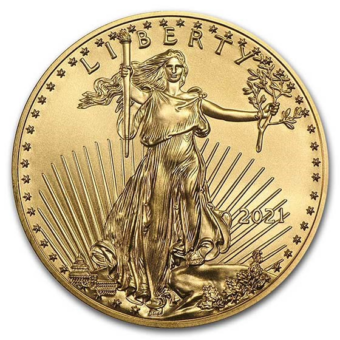


This week, gold and silver markets swung sharply as investors reacted to the growing war with Iran, shifting economic data, and a stronger U.S. dollar. Early fears that the conflict could trigger a stagflation shock—slower growth paired with higher inflation—pushed metals lower Monday before safe-haven demand sparked a strong rally Tuesday. Midweek, prices cooled as traders took profits and inflation data largely met expectations, while a rising dollar and higher Treasury yields pressured the metals again by Thursday. By Friday, markets turned cautious ahead of a key inflation report from the Federal Reserve’s preferred gauge, leaving investors weighing geopolitical risk, persistent inflation concerns, and signs that the powerful metals rally may be losing momentum.
Monday (3.09.26): Gold slipped Monday as investors worried the Iran war could spark a stagflation shock — meaning slower growth but hotter inflation — while a stronger U.S. dollar added more pressure on metals. April gold fell about $65 to around $5,092, while May silver managed a small rebound to about $84.50. The market mood shifted after comments suggesting the conflict could drag on, raising fears of a deeper energy supply shock and longer-lasting economic fallout. Economists warn that if oil prices stay elevated, inflation could climb while growth slows — a classic stagflation setup that’s already making investors brace for a tougher economic stretch.
Tuesday (3.10.26): Gold and silver rallied sharply Tuesday as investors rushed into safe-haven assets amid uncertainty surrounding the war with Iran. April gold jumped about $116 to roughly $5,217, while May silver surged more than $5 to around $89.59, helped along by a weaker U.S. dollar. Markets remain on edge as mixed signals emerge from Washington: President Trump suggested the conflict could end soon but later warned it might continue, while Defense Secretary Pete Hegseth indicated the heaviest bombing campaign so far was underway. Bottom line: the conflict remains fluid, and that uncertainty is keeping demand for precious metals elevated.
Wednesday (3.11.26): Gold and silver took a breather Wednesday as traders locked in profits and a stronger U.S. dollar added pressure. April gold slipped about $57 to around $5,183, while May silver dropped more than $4 to roughly $85.45. The move came even as fresh inflation data showed little surprise: February’s Consumer Price Index rose 0.3% for the month and 2.4% from a year ago, with core inflation at 0.2% monthly and 2.5% annually — basically right in line with expectations and giving markets little reason to react.
Thursday (3.12.26): Gold and silver slipped by midday Thursday as a stronger U.S. dollar and rising Treasury yields pressured the metals, while worries about persistent global inflation—and the economic slowdown it could trigger—also weighed on prices. April gold fell $43 to $5,136.40 and May silver dropped $0.365 to $85.15. What’s catching traders’ attention: even the war in Iran—arguably one of the biggest geopolitical shocks in decades—hasn’t sparked a major safe-haven rally. When gold and silver can’t rise on bullish news like that, some traders see it as a sign the metals rally may be running out of steam.
Friday (3.13.26): Gold and silver edged lower in early U.S. trading Friday as investors waited for a key inflation report closely watched by the Federal Reserve. April gold slipped $26.80 to $5,099, while May silver fell $1.73 to $83.39. The big focus today: the personal consumption expenditures (PCE) inflation report, expected to show prices rising 0.3% in January and 2.9% year-over-year, with core PCE seen at 3.1%. Traders are also watching a packed data slate including GDP revisions, durable goods orders, and the JOLTS job openings report. Meanwhile, geopolitical tension remains high as the Iran war pushes energy prices higher and adds risk to global markets, while U.S. and Chinese officials are set to meet in Paris this weekend to lay the groundwork for a Trump-Xi summit later this month.
—
February inflation holds steady at 2.4%, but rising oil prices could complicate outlook
The big picture
U.S. inflation remained stable in February, with consumer prices rising 2.4% annually — matching expectations and suggesting price pressures are easing only slowly. But a sharp rise in oil prices tied to escalating tensions with Iran could soon complicate the inflation outlook.
Driving the news
The latest Consumer Price Index report showed inflation broadly holding steady, with both headline and core readings landing exactly in line with Wall Street forecasts. The data, however, reflects price conditions before the recent oil shock that has pushed crude prices higher and could filter into consumer costs in the coming months.
By the numbers
• 0.3% — monthly increase in the Consumer Price Index for February
• 2.4% — annual inflation rate, unchanged from January and matching forecasts
• 0.2% — monthly gain in core CPI, which excludes food and energy
• 2.5% — annual core inflation rate
• 0.1% — monthly increase in rent, the smallest since January 2021
• 0.4% — monthly rise in food prices
• 42.1% — annual decline in egg prices after a sharp drop in supply-driven spikes last year
Why it matters
While inflation remains above the Federal Reserve’s 2% target, the February report suggests price pressures are not accelerating. However, higher oil prices following geopolitical tensions in the Middle East could reignite inflation concerns, particularly through gasoline, transportation, and shipping costs.
What to watch
• Oil prices and potential supply disruptions tied to tensions with Iran
• Whether rising energy costs begin pushing headline inflation higher in the spring
• Persistent services inflation in areas such as medical care, travel, and lodging
• The Federal Reserve’s policy decision at its upcoming March meeting
• Market expectations for interest rate cuts later in the year
The bottom line
February’s inflation report delivered exactly what economists expected — steady but still above target. For policymakers and investors, the bigger question now is whether the recent oil shock will reignite price pressures and delay the Federal Reserve’s path toward interest-rate cuts.
—
Oil spike to $100 revives stagflation fears as markets weigh economic fallout
The big picture
A surge in oil prices to around $100 a barrel is reviving concerns that the U.S. economy could slip into a stagflation scenario — where inflation rises while economic growth slows — echoing dynamics last seen during the energy shocks of the 1970s.
Driving the news
The Iran conflict has pushed oil prices sharply higher at the same time the U.S. labor market is losing momentum, with weak job growth and rising unemployment raising concerns that the economy could face the toxic combination of slowing growth and persistent inflation.
By the numbers
• $100 — level crude oil briefly crossed for the first time since 2022
• 92,000 — jobs lost in February according to the latest labor report
• 4.4% — U.S. unemployment rate after the recent increase
• 3% — core inflation rate based on the Fed’s preferred gauge
• 35% — probability of 1970s-style stagflation estimated by economist Ed Yardeni
Why it matters
Stagflation creates a difficult policy trap because tools used to stimulate growth — such as rate cuts or government spending — can worsen inflation. At the same time, rising energy costs can ripple through the economy by raising transportation, production, and food costs.
What to watch
• The duration of the Iran conflict and its impact on global oil supply
• Whether crude prices remain near or above $100 per barrel
• Labor market weakness following February’s job losses
• Federal Reserve policy as markets push expected rate cuts further out
• Signs that higher energy prices are feeding into broader inflation
The bottom line
Markets are increasingly worried the economy is caught between rising inflation and slowing growth — a classic stagflation setup. Whether those fears materialize will largely depend on how long the oil shock tied to the Iran conflict lasts.
—
Gold’s $10,000 target no longer far-fetched as debt and geopolitics reshape markets
The big picture
Gold’s long-term bull market may still be in its early stages, with structural forces such as rising global debt, geopolitical fragmentation, and declining trust in financial systems potentially pushing prices toward $10,000 an ounce within the next decade.
Driving the news
Capitalight Research Head of Research Chantelle Schieven says the once-radical idea of $10,000 gold is becoming increasingly plausible as global instability and mounting debt reshape the financial landscape. She argues that current momentum alone could carry gold to that level by the end of the decade.
By the numbers
• $10,000 — potential gold price target within five to seven years, according to Capitalight Research
• 2029 — timeline Schieven says gold could reach that level if current momentum continues
• 4 days — number of February trading sessions when gold moved less than $50
• 12 days — number of February sessions with price swings greater than $100
• $5,000 — level Schieven believes gold is unlikely to fall below in the current cycle
• $60 — approximate downside floor she sees for silver
Why it matters
Gold’s rally is increasingly tied to deeper structural shifts rather than short-term economic cycles. Rising government debt, geopolitical tensions, and declining confidence in global financial systems are encouraging central banks and investors to accumulate assets that carry no counterparty risk.
What to watch
• Rising global debt levels that limit central banks’ ability to raise interest rates
• Continued central bank gold purchases as countries diversify away from dollar assets
• Geopolitical tensions, including conflicts in the Middle East and China–Taiwan risks
• The broader trend toward deglobalization and fragmented economic blocs
• Increased retail demand for silver as gold becomes too expensive for many investors
The bottom line
What once sounded like a fringe prediction — $10,000 gold — is increasingly entering the mainstream discussion among market strategists. If geopolitical tensions persist and global debt continues climbing, the forces driving gold’s bull market may still have years left to run.
—
Private credit boom could fuel slow-burning financial crisis — and strengthen gold demand
The big picture
A rapidly expanding private credit market — largely operating outside traditional banking oversight — could become a major fault line in the global financial system, potentially triggering a slow, prolonged downturn that supports stronger demand for gold and other hard assets.
Driving the news
Unicus Research CEO Laks Ganapathi warns that vulnerabilities are building in private credit markets, where trillions of dollars in loans are issued through lightly regulated lenders rather than traditional banks. As confidence in credit markets weakens and inflation remains persistent, she argues investors may increasingly turn to gold as a store of value.
By the numbers
• $40 billion — approximate size of the private credit market in 2000
• ~$2 trillion — estimated size of the market today after two decades of rapid expansion
• ~1,000 tons — annual gold purchases by central banks since 2022
• 2025–2027 — timeframe Ganapathi believes a slow-moving credit crisis could unfold
• Trillions — potential exposure to private credit through retirement products and pooled investment vehicles
Why it matters
Private credit markets — sometimes referred to as “shadow banking” — grew rapidly after the 2008 financial crisis as banks faced stricter regulations. Unlike banks, many private credit funds operate without standardized stress testing, public credit ratings, or transparent market pricing, making it harder for investors to evaluate risk.
What to watch
• Signs of stress in private credit portfolios tied to commercial real estate, auto lending, and consumer finance
• Interconnections between private credit funds and traditional banks that provide financing lines
• Rising retail investor exposure through retirement funds and non-traded investment vehicles
• Evidence of stagflation as weak growth collides with persistent inflation
• Hedge funds positioning to short vulnerable credit assets
The bottom line
If cracks begin to appear in the fast-growing private credit ecosystem, the resulting loss of confidence could ripple slowly through the financial system. In that environment of rising debt, fragile credit markets, and persistent inflation, gold could regain its role as a preferred safe-haven asset.
—-
NEXT WEEK’S KEY EVENTS
Economic Calendar: March 16 – March 20, 2026 (ET)
MONDAY, March 16
• 8:30 am — Empire State Manufacturing Survey (March)
• 9:15 am — Industrial Production & Capacity Utilization (Feb.)
TUESDAY, March 17
• 10:00 am — Pending Home Sales (Feb.)
WEDNESDAY, March 18
• 8:30 am — Producer Price Index (Feb.)
• 2:00 pm — FOMC Interest-Rate Decision
• 2:30 pm — Fed Chair Powell Press Conference
THURSDAY, March 19
• 8:30 am — Initial Jobless Claims (March 14)
• 8:30 am — Philadelphia Fed Manufacturing Survey (March)
• 10:00 am — New Home Sales (Jan.)
FRIDAY, March 20
• None scheduled
NA — Not available
IMPACT ON PRECIOUS METALS MARKETS
Empire State Manufacturing Survey (Mon, 8:30 am ET)
• Stronger-than-expected reading → signals improving manufacturing activity and regional economic strength; mildly bearish for gold/silver.
• Weaker reading → suggests slowing industrial momentum and economic caution; mildly bullish for metals.
Regional manufacturing data offers an early glimpse into industrial conditions; moderate relevance.
Industrial Production & Capacity Utilization (Mon, 9:15 am ET)
• Strong production growth → signals economic expansion and firm industrial demand; mildly bearish for gold/silver.
• Weak or declining production → raises concerns about slowing economic activity; bullish for metals.
Industrial production reflects real economic output and manufacturing demand; moderate impact.
Pending Home Sales (Tue, 10:00 am ET)
• Stronger-than-expected contracts → signals housing demand resilience and consumer confidence; mildly bearish for gold/silver.
• Weak contract activity → suggests housing softness and potential economic cooling; mildly bullish for metals.
Housing indicators provide insight into consumer demand and interest-rate sensitivity; moderate relevance.
Producer Price Index (Wed, 8:30 am ET)
• Higher-than-expected inflation → reinforces upstream price pressures and inflation persistence; bullish for gold/silver.
• Lower producer inflation → signals easing cost pressures and potential inflation moderation; mildly bearish for metals.
The PPI measures inflation at the wholesale level and can foreshadow consumer price trends; moderate to high impact.
FOMC Interest-Rate Decision (Wed, 2:00 pm ET)
• Rate hike or hawkish stance → signals tighter monetary policy and stronger dollar expectations; bearish for gold/silver.
• Dovish tone or pause → suggests looser policy outlook and potential dollar weakness; bullish for metals.
Federal Reserve policy decisions directly influence interest rates, the dollar, and precious metals demand; very high impact.
Fed Chair Powell Press Conference (Wed, 2:30 pm ET)
• Hawkish commentary → reinforces expectations of prolonged tight policy and higher real yields; bearish for gold/silver.
• Dovish commentary → signals potential policy flexibility and easing financial conditions; bullish for metals.
Markets closely parse the Fed Chair’s remarks for guidance on future policy direction; very high impact.
Initial Jobless Claims (Thu, 8:30 am ET)
• Rising claims → signals potential labor market weakening; bullish for metals.
• Persistently low claims → suggests labor resilience and sustained economic strength; mildly bearish for gold/silver.
High-frequency labor data closely monitored by markets; moderate impact.
Philadelphia Fed Manufacturing Survey (Thu, 8:30 am ET)
• Strong reading → indicates expanding manufacturing conditions; mildly bearish for gold/silver.
• Weak or negative reading → suggests industrial contraction or slowing activity; mildly bullish for metals.
This regional survey provides insight into manufacturing sentiment and production trends; moderate relevance.
New Home Sales (Thu, 10:00 am ET)
• Strong sales → signals housing demand strength and economic confidence; mildly bearish for gold/silver.
• Weak sales → indicates housing market softness and potential economic cooling; mildly bullish for metals.
Housing activity reflects consumer confidence and interest-rate sensitivity; moderate relevance.