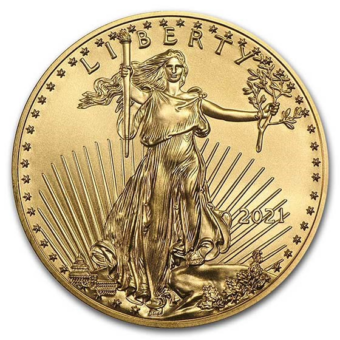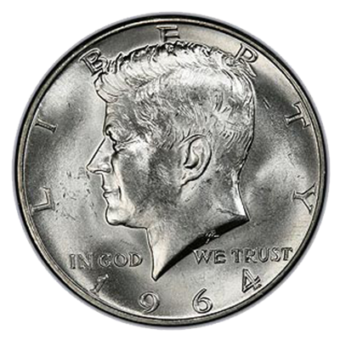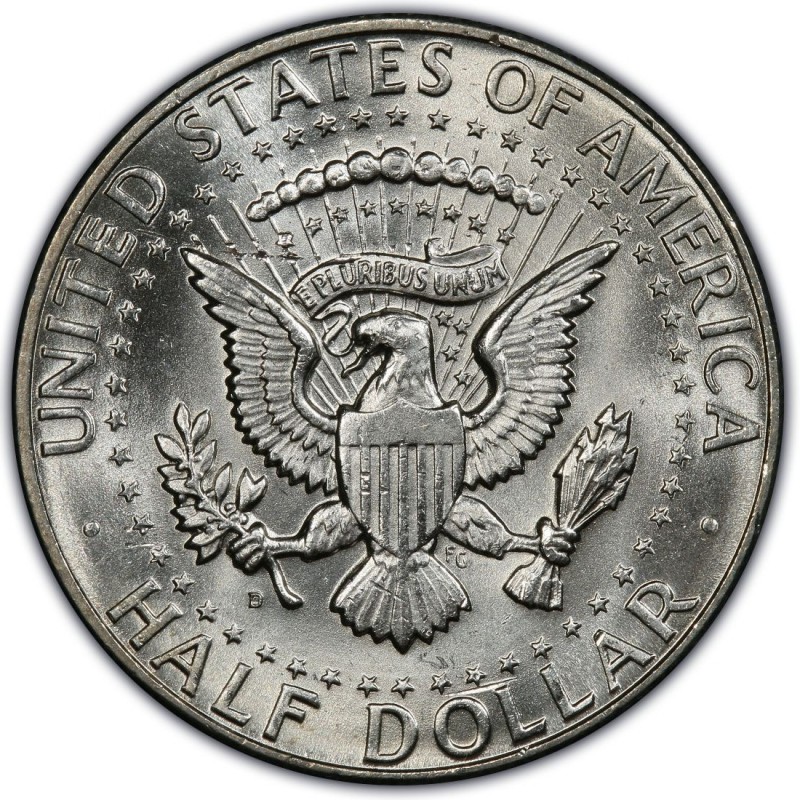


Monday (1.05.25): Gold and silver ripped higher Monday after the surprise U.S. raid in Venezuela reminded metals traders that geopolitics still matters, even if stock markets are busy breaking records and pretending nothing happened. February gold jumped about $130 to $4,459 and March silver tacked on nearly $6 to $77 as safe-haven buyers looked past the day’s calm tape and toward a messier horizon—Trump reasserting U.S. influence in the hemisphere, China eyeing Taiwan, Iran wobbling, and Russia brooding with little left but nukes. Add a looming week of heavyweight U.S. economic data that could shake Fed expectations, and it’s clear why gold and silver are moving now: metals traders are pricing the future while everyone else is still high-fiving the present.
Tuesday (1.06.25): Gold and silver jumped Tuesday as safe-haven buyers finally paid attention to what equities are pretending not to see: geopolitics just got louder. February gold popped about $44 to $4,495 and March silver surged nearly $4 to $80 after the U.S. raid in Venezuela, even as stocks shrugged and marched to fresh highs. While equity traders cheerfully whistle past the mess, metals traders are reading the room—Trump warning the hemisphere, China eyeing Taiwan, Iran wobbling, Russia stewing—and concluding that this isn’t “priced in,” it’s just getting started. In other words, gold and silver aren’t overreacting; they’re doing the thinking everyone else is postponing.
Wednesday (1.07.25): Gold and silver slipped Wednesday as short-term traders locked in profits near record highs, knocking February gold down about $40 to $4,456 and slamming March silver nearly $4 to $77, just as silver flirted with a textbook double-top and a potential air pocket below $69. While chart watchers panic, the bigger players aren’t blinking: the People’s Bank of China quietly extended its gold-buying streak to 14 months, adding more bullion even as prices wobble—suggesting this pullback looks more like trader nerves than a loss of conviction.
Thursday (1.08.26): Gold is holding modest gains after bouncing off intraday lows, while silver is sliding sharply as profit-taking and short-term liquidation hit the metal, with a bearish chart pattern amplifying the move. Silver’s weakness is also capping upside interest in gold, even as February gold trades about $10 higher near $4,473, while March silver is down roughly $1.60 near $76. Traders are now bracing for commodity index rebalancing that could trigger heavy futures selling in the days ahead, with estimates pointing to roughly $6.8 billion in silver futures and a similar amount in gold potentially hitting the market as benchmark weightings are reset.
Friday (1.09.26): Gold is steady and silver is swinging sharply as traders brace for a packed risk day, with dip-buyers still active amid elevated geopolitical tension and macro uncertainty. All eyes are on the jobs report—markets want a “just right” number as rate-cut expectations hang in the balance—while traders also juggle Supreme Court tariff risk, a potential Rio Tinto–Glencore mega-merger, shifting U.S.–Venezuela dynamics, escalating unrest in Iran, and a rare Russian missile strike near NATO’s doorstep, keeping safe-haven demand firmly in play.
—---
Gold Holds Firm as Silver Weakens Amid Rising Market Crosscurrents
The big picture
Gold showed resilience in Thursday trading, rebounding from intraday lows to finish higher near record territory, while silver came under heavier selling pressure, highlighting a growing divergence between the two precious metals.
Why it matters
The split performance suggests investors are increasingly treating gold and silver differently as macro risks, monetary policy signals, and technical factors evolve. Gold’s stability reinforces its role as a defensive asset, while silver’s pullback reflects its greater sensitivity to economic and positioning risks.
Driving the news
Gold recovered from an intraday low near $4,415 to close higher around $4,487, underscoring demand at elevated price levels. Silver futures fell sharply, dropping more than 1.5% on the session after hitting early lows, before staging only a modest late rebound.
By the numbers
• ~$4,487: Gold’s closing price after an intraday recovery.
• +$20.80: Gold’s gain on the session.
• ~$76.89: Silver’s settlement price after a sharp decline.
• −1.67%: Silver’s percentage loss on the day.
What’s driving volatility
Both metals face near-term turbulence from the annual Bloomberg Commodity Index (BCOM) rebalancing, which often triggers temporary dislocations as passive funds and algorithmic strategies adjust positions.
What to watch
Friday’s U.S. non-farm payrolls report is the next major catalyst. Weaker labor data could bolster gold by reviving rate-cut expectations and safe-haven demand, while stronger data may prompt broader profit-taking across commodities.
Reality check
Gold has remained relatively insulated from a strengthening U.S. dollar, signaling a breakdown in the usual inverse relationship. Recent declines in both metals appear driven more by profit-taking after a historic rally than by currency pressure.
The bottom line
Gold’s steadiness contrasts with silver’s vulnerability as markets digest technical rebalancing, economic data, and profit-taking after outsized gains. While both metals remain in long-term uptrends, silver’s higher volatility makes it more exposed to near-term corrections as key catalysts approach.
—-
U.S. Plans to Control Venezuelan Oil Sales for the Long Term
The big picture
The U.S. government says it will control sales of sanctioned Venezuelan oil “indefinitely,” as it prepares to selectively roll back restrictions on crude exports while keeping revenue under U.S. oversight.
Why it matters
Control over Venezuelan oil sales gives Washington leverage over Caracas at a moment when energy markets, geopolitics, and U.S. pressure on the Maduro government are converging. The policy also reshapes who benefits from Venezuela’s vast oil reserves and how that revenue is used.
Driving the news
White House officials said initial sales could involve 30 million to 50 million barrels of oil, with proceeds deposited into U.S.-controlled accounts. Energy Secretary Chris Wright said the U.S. needs direct control of the sales to push political and economic changes inside Venezuela.
By the numbers
• 30–50 million barrels: Expected size of the first oil sales.
• ~$2.8 billion: Estimated revenue from those sales.
• ~1 million barrels per day: Venezuela’s current oil output, after years of decline.
• <1%: Venezuela’s share of global oil production today.
What they’re saying
U.S. officials argue the funds will be used to stabilize Venezuela’s economy and benefit its people rather than the government. Venezuela’s state oil company, PDVSA, said negotiations are ongoing, while critics in the U.S. called the plan extreme and legally questionable.
State of play
The administration has begun marketing the oil and is working with major banks and commodity firms. Sanctions are expected to be selectively rolled back, allowing crude to flow while keeping revenue tightly controlled by Washington.
Reality check
Years of mismanagement and underinvestment mean Venezuela cannot quickly boost production. Analysts warn that meaningful output growth would require billions of dollars and long-term commitments that energy firms may be reluctant to make.
The bottom line
U.S. control of Venezuelan oil sales could reshape energy flows and political leverage in the region, but turning that control into sustained economic or production gains will likely be slow, costly, and contentious.
—-------
Venezuela’s Critical Minerals Enter the U.S.–China AI Power Struggle
The big picture
U.S. attention on Venezuela is expanding beyond oil to include the country’s largely untapped reserves of critical minerals that underpin artificial intelligence systems and advanced military technologies.
Why it matters
Developing Venezuela’s mineral resources could help stabilize its battered economy while offering the United States a strategic pathway to reduce reliance on China for inputs essential to AI, defense platforms, and next-generation electronics.
Driving the news
Commerce Secretary Howard Lutnick recently highlighted Venezuela’s dormant mining sector, pointing to significant mineral potential that has gone underdeveloped despite the country’s long history in resource extraction.
The big picture
The mineral push reflects a broader U.S. strategy in which AI leadership, weapons superiority, and economic growth are increasingly intertwined. Control over critical minerals is becoming as decisive as control over energy once was.
What they’re saying
Analysts argue the renewed focus underscores a global shift toward supply-chain sovereignty, with Washington and Beijing each seeking to insulate their technology ecosystems while competing for dominance in the AI race.
State of play
If the U.S. can access Venezuelan rare earths, it could gain leverage in its trade conflict with China. Without alternatives, China maintains a powerful advantage by restricting exports of minerals that are vital to global markets and industrial output.
Reality check
Raw materials alone are not enough. China currently dominates the refining of rare earths and other non-oil commodities, meaning that even with new supply sources, the U.S. would face years of investment and logistical hurdles before AI firms could benefit.
The bottom line
Venezuela’s mineral reserves offer strategic promise for the U.S., but turning that potential into real gains for AI and defense industries will be a slow process constrained by refining capacity, manufacturing realities, and time.
—
Trump Announces Capture of Venezuela’s Nicolás Maduro in U.S. Military Operation
The big picture
President Donald J. Trump announced that U.S. forces have captured Venezuelan leader Nicolás Maduro in a joint military and law enforcement operation in Caracas, marking a dramatic escalation in U.S. intervention in Venezuela and effectively ending Maduro’s rule.
Driving the news
Trump said the overnight operation targeted a heavily fortified site in Caracas and resulted in the capture of both Maduro and his wife, Cilia Flores de Maduro, without U.S. casualties. The operation—dubbed Operation Absolute Resolve—was the product of months of planning across U.S. military branches and intelligence agencies. Maduro will now face U.S. criminal proceedings tied to a 2020 Justice Department indictment on charges including narco-terrorism and drug trafficking.
By the numbers
• 2 high-profile captures: Nicolás Maduro and Cilia Flores de Maduro.
• 150+ aircraft: Used in coordinated air, ground, maritime, and space operations.
• 0 U.S. casualties: According to Pentagon officials.
• 2020: Year of the U.S. indictment accusing Maduro of narco-terrorism.
Why it matters
The capture of a sitting foreign leader by U.S. forces represents a rare and forceful assertion of American power in the Western Hemisphere. The Trump administration framed the mission as a response to state-embedded narco-terrorism, signaling a willingness to treat criminal networks tied to governments as military threats rather than purely diplomatic or legal challenges.
What to watch
Watch for international reactions, especially from U.S. allies and countries aligned with Venezuela; developments in Venezuela’s interim governance; legal proceedings against Maduro in U.S. courts; and whether this operation establishes a precedent for future U.S. actions against state-linked criminal organizations.
The bottom line
The capture of Nicolás Maduro is more than a headline-grabbing military success—it marks a fundamental shift in how the U.S. is willing to confront hostile regimes accused of criminal activity. The move reshapes the balance of power in Venezuela and signals a far more aggressive U.S. posture toward narco-states in the region.
—
NEXT WEEK’S KEY EVENTS
Economic Calendar: January 12 – January 16, 2026 (ET)
MONDAY, Jan. 12
• 8:00 am — Richmond Fed President Tom Barkin speaks
• 12:30 pm — Atlanta Fed President Raphael Bostic speaks
TUESDAY, Jan. 13
• 8:30 am — U.S. Consumer Price Index (Dec.)
• 10:00 am — U.S. New Home Sales (Oct.)
• 10:00 am — St. Louis Fed President Alberto Musalem speaks
• 4:00 pm — Richmond Fed President Tom Barkin speaks
WEDNESDAY, Jan. 14
• 8:30 am — U.S. Retail Sales (Nov.)
• 8:30 am — U.S. Producer Price Index (Nov.)
• 10:00 am — Existing Home Sales (Dec.)
• 11:00 am — Minneapolis Fed President Neel Kashkari speaks
• 2:00 pm — New York Fed President John Williams opening remarks
THURSDAY, Jan. 15
• 8:30 am — Initial Jobless Claims (Jan. 10)
• 8:30 am — Empire State Manufacturing Survey (Jan.)
• 8:30 am — Philadelphia Fed’s Manufacturing Survey (Jan.)
• 12:40 pm — Richmond Fed President Tom Barkin speaks
FRIDAY, Jan. 16
• 9:15 am — Industrial Production & Capacity Utilization (Dec.)
IMPACT ON PRECIOUS METALS MARKETS
Federal Reserve Speakers (Mon–Thu, Multiple Appearances)
• Coordinated emphasis on inflation persistence, labor strength, or policy credibility → reinforces higher-for-longer rate expectations; bearish for gold/silver.
• Shift toward growth risks, financial conditions, or policy lags → strengthens easing narrative; bullish for gold/silver.
Markets are highly sensitive to phrasing consistency and any deviation from core FOMC messaging.
U.S. Consumer Price Index (Tue, 8:30 am ET)
• Hot headline/core CPI → rate-cut expectations pushed out, USD firming; bearish for gold/silver.
• Softer inflation trend → disinflation narrative reinforced; bullish for gold/silver.
Primary inflation barometer; highest-volatility release of the week.
U.S. New Home Sales (Tue, 10:00 am ET)
• Upside surprise → housing resilience, demand stability; mildly bearish for metals.
• Weak sales → rate sensitivity exposed, growth concerns; mildly bullish for metals.
Secondary, sentiment-driven impact.
U.S. Retail Sales (Wed, 8:30 am ET)
• Strong consumer spending → growth resilience, inflation risk; bearish for gold/silver.
• Weak sales → demand slowdown signal; bullish for gold/silver.
Key read on consumption momentum.
U.S. Producer Price Index (Wed, 8:30 am ET)
• Firm input prices → pipeline inflation risk; bearish for metals.
• Cooling producer prices → disinflation confirmation; bullish for metals.
Useful lead indicator for CPI.
Existing Home Sales (Wed, 10:00 am ET)
• Stable or rising sales → housing market holding up; mildly bearish for metals.
• Declining activity → rate pressure persists; mildly bullish for metals.
Lagging but sentiment-relevant.
Initial Jobless Claims (Thu, 8:30 am ET)
• Rising claims → labor-market softening narrative; bullish for gold/silver.
• Persistently low claims → delays easing expectations; bearish for metals.
Weekly volatility; trend more important than the single print.
Empire State & Philly Fed Manufacturing Surveys (Thu, 8:30 am ET)
• Improving activity and prices paid → resilience and inflation concern; bearish for metals.
• Deeper contraction → manufacturing stress confirmed; bullish for metals.
Early read on regional manufacturing momentum.
Industrial Production & Capacity Utilization (Fri, 9:15 am ET)
• Strong output and utilization → growth strength, inflation risk; bearish for metals.
• Weak production → slowdown confirmed; bullish for gold/silver.
Cyclical indicator; moderate market impact.