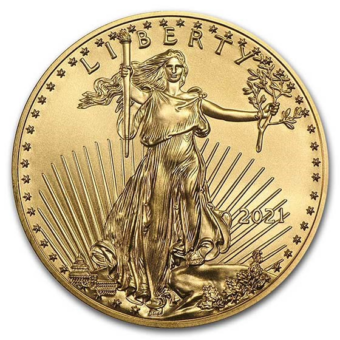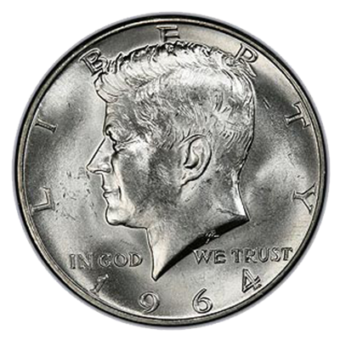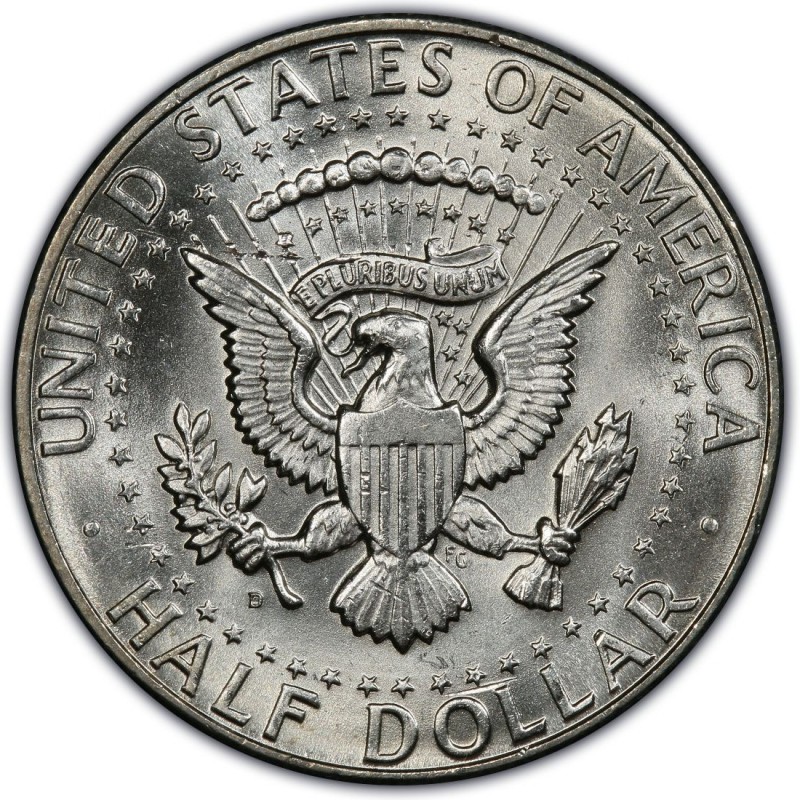


Global markets are caught in a constant tug-of-war, with gold prices pulled between competing forces that refuse to settle into a single narrative. Geopolitical tensions, Federal Reserve policy expectations, and steady central bank demand are each exerting their own influence—creating sharp swings, false starts, and sudden reversals. As investors try to make sense of the noise, one thing is clear: the battle shaping gold’s direction is far from over.
Monday (4.06.26): Gold is edging higher while silver is slipping midday as traders juggle mixed signals—some chart-driven buying and safe-haven demand from the Middle East conflict are giving gold a lift, but rising U.S. stocks are capping gains. June gold added $9.50 to $4,688.20, while May silver fell $0.26 to $72.65. The bigger drag? Friday’s strong U.S. jobs report, which gave hawkish Fed voices more ammo to keep rates higher for longer—typically a headwind for metals. Translation: gold’s getting a mild safety bid, but the “higher-for-longer” rate narrative is keeping a lid on both metals.
Tuesday (4.07.26): Gold and silver are slipping early in U.S. trading as markets brace for a hard deadline: the U.S. wants Iran to reopen the Strait of Hormuz by tonight—or else—and the latest headlines aren’t easing nerves. June gold fell $11.20 to $4,673, and May silver dropped $0.79 to $72.07, with tensions rising as Iran rejects ceasefire terms, keeps up attacks, and regional risks escalate (missiles intercepted, warnings issued). Meanwhile, China is quietly buying the dip—adding about 5 tons of gold in March for its 17th straight month—helping support longer-term sentiment even after gold’s brutal 12% drop last month. On the energy side, surging oil prices (up ~68% since the conflict began) are pushing U.S. shale producers to ramp output, which could reshape supply in the months ahead. Bottom line: short-term pressure from geopolitics and a strong dollar is weighing on metals, but central bank demand—especially from China—is still lurking in the background.
Wednesday (4.08.26): Gold and silver are slipping early in U.S. trading as markets brace for a high-stakes deadline: the U.S. wants Iran to reopen the Strait of Hormuz by tonight—or face consequences. June gold dipped $11.20 to $4,673, while May silver dropped $0.79 to $72.07. But zoom out and there’s a twist—China is still loading up on gold, with its central bank adding about 5 tons in March (its 17th straight month of buying), helping steady sentiment after gold’s brutal 12% drop last month—the worst since 2008—when war tensions boosted the dollar and dimmed hopes for Fed rate cuts. Meanwhile, not all central banks are buying: Turkey sold roughly 60 tons to defend its currency, while Poland helped drive modest net buying earlier this year. Bottom line: short-term pressure is real, but big players like China are still quietly backing gold.
Thursday (4.09.26): Gold and silver are inching higher midday Thursday after the Fed’s favorite inflation gauge—the core PCE—came in exactly as expected, giving markets no real surprises to chew on. June gold climbed $26.40 to $4,803.50, while May silver added $0.15 to $75.54. Under the hood, inflation is still running warm: core PCE rose 0.4% month-over-month in February, matching estimates and holding near a 10-month high, while the annual rate cooled slightly to 3% (from 3.1%)—still well above the Fed’s 2% target. Translation: inflation isn’t spiking, but it’s not going away either—and metals are quietly taking note.
Friday (4.10.26): Gold and silver slipped in early Friday trading ahead of a key inflation test, with markets bracing for a hot March CPI print and still-sticky core PCE data that keeps the Fed in “higher-for-longer” mode; meanwhile, geopolitics stayed messy but mostly contained, as a fragile U.S.–Iran ceasefire held (barely) amid Israel-Hezbollah clashes and high-stakes talks in Pakistan over reopening the Strait of Hormuz—a critical oil chokepoint—while on the sidelines, ConocoPhillips is eyeing a return to Venezuela’s massive reserves, and Ukraine officials signaled cautious optimism that a Russia peace deal may not be far off.
—
Gold’s next breakout could push prices toward $7,000 — but key resistance looms
The big picture
Gold remains volatile but resilient, with analysts suggesting the current cycle could drive prices significantly higher. Despite recent pullbacks tied to geopolitical tensions and a stronger U.S. dollar, the broader trend still points toward a potential breakout.
Driving the news
Gold is recovering after recent declines, supported in part by easing geopolitical fears and renewed ceasefire narratives. Analysts argue that the current bull cycle, which began in 2023, still has momentum — with historical breakout patterns suggesting another major leg higher.
By the numbers
• $4,700 — recent gold price level
• 25%–30% — typical gain following breakout phases
• 2.5–3 months — average duration of prior advance cycles
• $5,000 — near-term resistance level
• $7,000–$7,250 — projected breakout target
• $8,000 — potential overshoot in bullish conditions
Why it matters
If gold follows its historical breakout pattern, the next move could be one of the largest in the current cycle. However, macro forces — including Fed policy expectations and dollar strength — continue to create headwinds that could delay or disrupt the rally.
What to watch
• Gold’s ability to break and hold above $5,000 resistance
• Federal Reserve policy expectations and interest rate trajectory
• U.S. dollar strength versus safe-haven demand
• Geopolitical developments, particularly ceasefire durability
• Momentum and duration of the current bull cycle
The bottom line
The path to $7,000 is plausible but not guaranteed. Gold’s next major move will likely hinge on its ability to overcome near-term resistance and navigate shifting macro forces — with volatility remaining a defining feature of the trend.
—
Strait of Hormuz reopening faces friction as policy demands clash with market reality
The big picture
A fragile U.S.–Iran ceasefire has reopened the Strait of Hormuz in principle, but actual shipping activity remains limited. While U.S. officials insist the route is open, uncertainty over safety, tolls, and enforcement is keeping global energy flows constrained.
Driving the news
The White House is demanding the strait be opened “without limitation, including tolls,” but mixed signals from Iran and low tanker traffic suggest reopening is far from complete. Shipping firms remain cautious, citing unclear rules, potential inspections, and safety risks.
By the numbers
• 2 weeks — duration of the ceasefire agreement
• 2 vessels — initial ships passing through after the deal
• 100–120 vessels/day — normal pre-war traffic
• 10–15 vessels — estimated current daily transit pace
• ~20% — share of global oil supply flowing through the strait
• ~90% — decline in traffic during peak disruption
Why it matters
The Strait of Hormuz is a critical artery for global oil supply, and continued disruption — even partial — can sustain volatility in energy markets. If shipping confidence doesn’t return quickly, supply constraints could persist despite the ceasefire.
What to watch
• Whether oil tankers — not just bulk carriers — resume transit
• Clarity on Iran’s tolling policies and inspection requirements
• Shipping company confidence and insurance conditions
• Actual traffic volume versus official claims of reopening
• Progress of ceasefire negotiations and enforcement
The bottom line
The strait may be “open” politically, but not operationally. Until shipping confidence returns and flows normalize, the global energy market remains exposed to disruption and volatility.
—
Strait reopening sparks market rally, but uncertainty lingers
The big picture
A two-week ceasefire between the U.S. and Iran — alongside a commitment to reopen the Strait of Hormuz — triggered a sharp drop in oil prices and a broad market rally. Investors appeared to anticipate the de-escalation, even as geopolitical rhetoric remained volatile.
Driving the news
Oil prices posted their largest one-day decline since the 1991 Gulf War, easing inflation concerns and lifting global equities. Asian and European markets surged, while U.S. stock futures jumped and Treasury yields declined as risk sentiment improved.
By the numbers
• 2 weeks — duration of the ceasefire agreement
• Biggest drop since 1991 — one-day fall in Brent crude
• +2.7% — S&P 500 futures
• +3.5% — Nasdaq futures
• ~4% — S&P 500 decline since start of Iran conflict
Why it matters
The reopening of the Strait of Hormuz could restore critical energy flows, easing pressure on global supply chains and inflation. But uncertainty remains over whether shipping companies feel safe enough to resume operations, leaving the recovery fragile.
What to watch
• Shipping confidence and tanker traffic through the Strait of Hormuz
• Enforcement and durability of the ceasefire
• Oil price volatility and energy supply normalization
• Corporate earnings expectations amid recent instability
• Policy signals and geopolitical rhetoric from U.S. and Iran
The bottom line
Markets are responding to relief, not resolution. The ceasefire may stabilize conditions in the short term, but lingering uncertainty around security, policy, and energy flows suggests volatility is far from over.
—
A new recession red flag emerges: the “Vicious Cycle Index”
The big picture
A new experimental recession indicator — the “Vicious Cycle Index” — suggests the labor market may be weaker than headline unemployment data implies. The concern: underlying deterioration in participation could signal rising economic fragility.
Driving the news
Moody’s chief economist Mark Zandi developed the index while experimenting with AI tools, aiming to capture a broader picture of labor market stress. His approach highlights how declining labor force participation may reveal hidden weakness not reflected in the unemployment rate alone.
By the numbers
• 4.3% — unemployment rate in March
• +0.1 percentage point — increase from a year ago
• ~0.5 percentage point — drop in labor force participation year over year
• Lowest since 2005 — participation rate among older workers
• 45% — Moody’s estimated probability of a recession
Why it matters
If fewer people are working or even looking for work, the unemployment rate can understate real economic slack. That dynamic risks triggering a feedback loop: weaker job prospects reduce spending, slowing the economy further and reinforcing labor market weakness.
What to watch
• Trends in labor force participation versus unemployment
• Signs of consumer pullback in spending
• Divergence between traditional recession indicators and new measures
• Behavior of older workers exiting the labor force
• Whether the index gains broader acceptance among economists
The bottom line
The economy isn’t in recession — yet. But emerging signals suggest traditional indicators may be missing deeper cracks, and new frameworks like the Vicious Cycle Index are attempting to capture risks that standard models overlook.
—-
NEXT WEEK’S KEY EVENTS
Economic Calendar: April 13 – April 17, 2026 (ET)
MONDAY, April 13
• 10:00 am — Existing Home Sales (March)
TUESDAY, April 14
• 8:30 am — Producer Price Index (March)
• 11:30 am — Fed Panel: Collins, Barkin, and Paulson (Rural Economy)
WEDNESDAY, April 15
• 8:30 am — Empire State Manufacturing Survey (April)
THURSDAY, April 16
• 8:30 am — Initial Jobless Claims (April 11)
• 8:30 am — Philadelphia Fed Manufacturing Survey (April)
• 9:15 am — Industrial Production and Capacity Utilization (March)
• 8:35 pm — New York Fed President John Williams Speaks
FRIDAY, April 17
• 8:30 am — Housing Starts and Building Permits (March)
IMPACT ON PRECIOUS METALS MARKETS
Federal Reserve Speakers and Panel (Tue, 11:30 am ET; Thu, 8:35 pm ET)
• Hawkish tone → reinforces higher-for-longer rate expectations; bearish for gold/silver.
• Dovish tone → signals potential easing or policy flexibility; bullish for metals.
Fed communication can shift rate expectations and broader market sentiment; moderate-to-high impact.
Producer Price Index (Tue, 8:30 am ET)
• Higher inflation → increases likelihood of tighter monetary policy; bearish for gold/silver.
• Lower inflation → supports easing expectations; bullish for metals.
PPI offers an early read on inflation pressures in the pipeline; high impact.
Empire State Manufacturing Survey (Wed, 8:30 am ET)
• Stronger reading → signals regional economic strength; mildly bearish for gold/silver.
• Weaker reading → suggests slowing activity; mildly bullish for metals.
Regional manufacturing data provides early signals on economic momentum; low-to-moderate impact.
Initial Jobless Claims (Thu, 8:30 am ET)
• Rising claims → signals labor market softening; bullish for metals.
• Low claims → indicates continued labor strength; mildly bearish for gold/silver.
High-frequency labor data closely watched for shifts in economic conditions; moderate impact.
Philadelphia Fed Manufacturing Survey (Thu, 8:30 am ET)
• Stronger reading → indicates manufacturing resilience; mildly bearish for gold/silver.
• Weaker reading → suggests contraction or slowdown; mildly bullish for metals.
Reinforces or diverges from other regional data; moderate impact.
Industrial Production and Capacity Utilization (Thu, 9:15 am ET)
• Higher output/utilization → signals economic strength; bearish for gold/silver.
• Lower output/utilization → points to slowing industrial activity; bullish for metals.
Tracks overall industrial health and demand conditions; moderate impact.
Housing Starts and Building Permits (Fri, 8:30 am ET)
• Stronger housing data → indicates economic confidence and growth; mildly bearish for gold/silver.
• Weaker housing data → suggests economic caution; mildly bullish for metals.
Housing activity reflects interest-rate sensitivity and broader economic outlook; moderate impact.