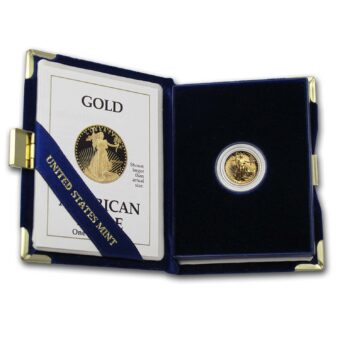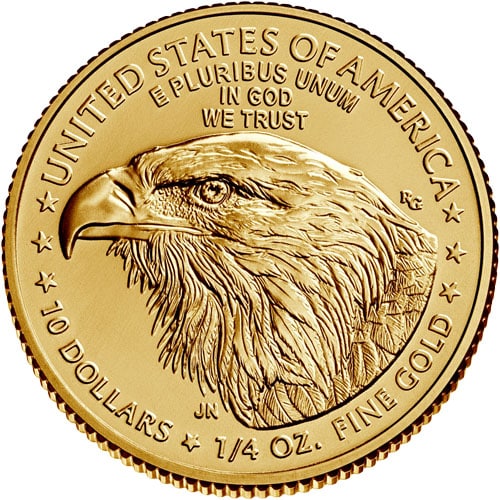


Monday (4.13.26): Gold and silver slipped Monday after U.S.-Iran peace talks broke down—sending oil up and the dollar along for the ride. June gold fell $56 to $4,731, while May silver dropped $2.46 to $74.03. Translation: higher energy prices = stickier inflation = fewer Fed rate cuts = pressure on metals. The takeaway: when inflation heats up and the dollar flexes, gold and silver tend to cool off.
Tuesday (4.14.26): Gold and silver rallied into midday Tuesday as the U.S. dollar slid to a six-week low—fuel for metals even as risk appetite improved (yes, both can happen). June gold jumped about $63 to $4,831, while May silver surged $3.59 to $79.27. The backdrop: renewed chatter around U.S.-Iran talks easing inflation fears and boosting demand expectations. Meanwhile, March PPI came in cooler than expected—0.5% MoM vs. 1.1% forecast—even with an energy spike tied to the conflict. Core inflation also eased slightly. The market reaction? Shrug. Metals kept climbing, driven more by dollar weakness than inflation data.
Wednesday (4.15.26): Gold slipped while silver edged higher in choppy midday trade Wednesday, after both metals tagged three-week highs overnight—think profit-taking meets hesitation. June gold fell about $20 to $4,830, while May silver climbed near $80. But here’s the twist: metals are getting a tailwind from a weakening U.S. dollar, as renewed U.S.-Iran talks unwind some of the greenback’s war-driven gains. The Bloomberg dollar index is down this month after a March surge, and analysts see more downside ahead—especially against the euro, yen, and Swiss franc. Even Kenneth Rogoff says the dollar could be ~20% overvalued, hinting at a longer-term slide. The takeaway: short-term chop, long-term setup still favors metals.
Thursday (4.16.26): Gold is inching higher while silver takes a breather—classic pause after a run. June gold is up slightly near $4,830, while silver slipped to around $79 as markets cool off and consolidate. Meanwhile, oil’s climbing (~$93.50), the dollar’s firming, and 10-year yields are hovering near 4.3%—a mix that’s keeping metals in check. The big levels: gold bulls want a break above $5,000 (that’s the headline grabber), while bears are eyeing a drop toward $4,500; silver’s playing a similar game, with $85 as the upside target and $70 as the floor. Bottom line: metals aren’t making big moves today—but the battle lines are clearly drawn.
Friday (4.17.26): Gold and silver ticked slightly higher Friday as volatility cooled and traders bet the Middle East tensions may ease—June gold near $4,814, silver around $79. Donald Trump says a U.S.-Iran deal looks close (not confirmed by Iran), while oil markets stay shaky and Canada signals progress on a broader U.S. trade deal—net: less panic, but uncertainty still lingers.
—
US dollar’s global share drops to 46%, signaling long-term decline
The big picture
The U.S. dollar’s dominance in global markets is slipping, with its share falling to multi-decade lows as central banks diversify reserves and increase gold holdings.
Driving the news
New data shows the dollar losing ground in both foreign exchange usage and global reserves. At the same time, central banks are accelerating gold purchases and shifting toward alternative currencies.
By the numbers
• 46% — current share of global FX and gold reserves
• -15 points — decline in dollar share since 2017
• 57% — share of global reserves (excluding gold)
• 1994 — last time reserves were this low
• 1990–1991 — last time USD fell below 50% of reserves
Why it matters
A declining dollar share signals a gradual shift in global financial power. As central banks diversify away from the dollar, it could weaken its role as the world’s primary reserve currency—impacting trade, capital flows, and U.S. economic influence.
What to watch
• Continued central bank gold accumulation
• Shifts into alternative reserve currencies
• Geopolitical tensions influencing reserve strategy
• Trends in global debt and confidence in the U.S. economy
• Whether USD share continues falling below key thresholds
The bottom line
The dollar isn’t collapsing—but it is losing ground. The trend points to a slower, structural shift in global reserves, with gold and alternative currencies steadily chipping away at its dominance.
–
Gold holds above $4,800 as strong labor data caps upside momentum
The big picture
Gold is stabilizing above the $4,800 level, but momentum remains muted as a resilient U.S. labor market reduces urgency for safe-haven demand. Prices are holding firm, yet struggling to break higher.
Driving the news
Better-than-expected U.S. jobless claims data signaled ongoing labor market strength, dampening bullish enthusiasm for gold. While prices rebounded above key support overnight, the macro backdrop is limiting follow-through buying.
By the numbers
• $4,800 — key support level reclaimed and holding
• $4,815.80 — latest spot gold price
• 207,000 — latest weekly jobless claims (below expectations)
• 213,000 — consensus forecast
• 209,750 — four-week moving average of claims
• 1.818 million — continuing jobless claims
Why it matters
A strong labor market reduces recession fears and can delay interest rate cuts, both of which tend to weigh on gold. As a result, even when gold holds key levels, upside momentum may stall without a clear macro catalyst.
What to watch
• Whether gold can maintain support above $4,800
• Trends in U.S. labor market data and unemployment claims
• Federal Reserve policy expectations and rate outlook
• Real yields and their impact on non-yielding assets like gold
• Broader risk sentiment and safe-haven demand
The bottom line
Gold is holding steady—but not breaking out. Without signs of economic weakness or dovish policy shifts, prices may remain range-bound despite underlying support.
—
BRICS surpasses G7 in global GDP share as de-dollarization accelerates
The big picture
The BRICS bloc now accounts for roughly 40% of global GDP (PPP), overtaking the G7’s shrinking share and signaling a structural shift toward a more multipolar global economy.
Driving the news
IMF data confirms BRICS’ rising dominance, fueled by stronger growth, resource control, and expanding trade conducted outside the U.S. dollar—particularly in energy markets.
By the numbers
• 40% — BRICS share of global GDP (PPP)
• 28–29% — G7 share of global GDP
• 3.7% — BRICS average growth rate (2026)
• 1.1% — G7 average growth rate
• $1 trillion+ — BRICS non-dollar trade by end of 2025
• 72% — share of global rare earth reserves controlled by BRICS
• 43% — share of global oil production
• 42% — share of global wheat supply
Why it matters
The widening gap between BRICS and the G7 reflects a deeper economic realignment. As trade increasingly bypasses the dollar—especially in energy markets—it challenges the foundations of U.S. financial dominance and accelerates the shift toward alternative currencies.
What to watch
• Expansion of non-dollar trade in oil and commodities
• Adoption of yuan and alternative payment systems (e.g., CIPS, CBDCs)
• Geopolitical tensions impacting global trade routes like the Strait of Hormuz
• Central bank diversification away from the dollar
• Continued divergence in growth between BRICS and G7 economies
The bottom line
BRICS isn’t just catching up—it’s pulling ahead. With stronger growth and rising non-dollar trade, the bloc is reshaping global economic power and accelerating the move away from a dollar-dominated system.
—
Federal government collects more than double state and local taxes combined
The big picture
Federal tax collections dominate the U.S. system, far exceeding what state and local governments collect—reinforcing the federal government’s outsized fiscal role.
Driving the news
New data highlights the scale of federal taxation, with income, payroll, and excise taxes generating significantly more revenue than state and local taxes combined.
By the numbers
• $5.1 trillion — total federal tax revenue (2024)
• $1.47 trillion — total state tax revenue
• $1.1 trillion — total local tax revenue
• $2.5 trillion — combined state and local taxes
• ~3.5x — federal taxes vs. state taxes ratio
• 60%+ — share of total taxes coming from federal level in most states
Why it matters
The imbalance underscores how centralized tax collection has become. Federal dominance affects everything from public spending priorities to economic policy, while limiting the relative influence of state and local governments.
What to watch
• Trends in federal vs. state/local tax revenue over time
• Policy debates around decentralization of government programs
• Federal spending growth and deficit financing
• Migration trends driven by state and local tax differences
• Shifts in taxpayer burden across income groups
The bottom line
When it comes to taxation, the federal government is the main player. Its share of total tax revenue continues to dwarf state and local levels, shaping the structure—and power dynamics—of the U.S. fiscal system.
—
Silver rebound gains traction as demand drivers point to next breakout
The big picture
Silver is recovering sharply alongside gold, with multiple demand forces—industrial, energy, and investment—aligning to support a potential new upward wave.
Driving the news
Prices have rebounded from recent lows, supported by rising energy costs, geopolitical uncertainty, and strong demand tied to solar panel production and industrial use.
By the numbers
• ~$79–$80 — current silver price (U.S.)
• ~$70 — recent low
• $89.50 — silver price in Shanghai (≈13% premium)
• ~19% — share of silver demand from solar panels
• $120 — recent peak during prior surge
• $100+ — near-term bullish target
• $200 — long-term bullish projection
Why it matters
Silver sits at the intersection of industrial demand and investment demand. With solar adoption rising and physical supply appearing tight—especially in China—the metal could see accelerated price moves if both demand streams surge simultaneously.
What to watch
• Continued strength in solar panel demand globally
• Energy prices and their impact on industrial activity
• Shanghai premium as a signal of physical supply tightness
• Investment demand returning after prior price spike
• Geopolitical risks and broader macro instability
The bottom line
Silver’s setup is strengthening again. If industrial demand and investor interest converge, the next major rally could push prices back above $100—with higher targets possible over time.
—-
NEXT WEEK’S KEY EVENTS
Economic Calendar: April 20 – April 24, 2026 (ET)
MONDAY, April 20
• None scheduled
TUESDAY, April 21
• 8:30 am — U.S. Retail Sales (March)
• 10:00 am — U.S. Leading Economic Indicators (Feb.)
• 10:00 am — Pending Home Sales (March)
WEDNESDAY, April 22
• None scheduled
THURSDAY, April 23
• 8:30 am — Initial Jobless Claims (April 18)
• 9:45 am — S&P Flash U.S. Services PMI (April)
• 9:45 am — S&P Flash U.S. Manufacturing PMI (April)
FRIDAY, April 24
• 10:00 am — Consumer Sentiment (Final) (April)
IMPACT ON PRECIOUS METALS MARKETS
U.S. Retail Sales (Tue, 8:30 am ET)
• Stronger spending → signals economic resilience; bearish for gold/silver.
• Weaker spending → suggests slowing demand; bullish for metals.
Consumer spending is a key driver of economic growth and inflation expectations; high impact.
U.S. Leading Economic Indicators (Tue, 10:00 am ET)
• Rising indicators → point to future economic strength; mildly bearish for gold/silver.
• Falling indicators → signal potential slowdown; mildly bullish for metals.
Forward-looking composite index helps gauge economic direction; moderate impact.
Pending Home Sales (Tue, 10:00 am ET)
• Stronger housing demand → reflects economic confidence; mildly bearish for gold/silver.
• Weaker demand → signals caution in housing; mildly bullish for metals.
Housing activity is sensitive to interest rates and broader economic conditions; moderate impact.
Initial Jobless Claims (Thu, 8:30 am ET)
• Rising claims → signals labor market softening; bullish for metals.
• Lower claims → indicates continued labor strength; mildly bearish for gold/silver.
High-frequency labor data closely watched for shifts in economic conditions; moderate impact.
S&P Flash U.S. Services PMI (Thu, 9:45 am ET)
• Stronger services activity → signals economic expansion; bearish for gold/silver.
• Weaker activity → suggests slowing demand; bullish for metals.
Services sector dominates U.S. economic output; moderate-to-high impact.
S&P Flash U.S. Manufacturing PMI (Thu, 9:45 am ET)
• Stronger manufacturing → indicates industrial strength; mildly bearish for gold/silver.
• Weaker manufacturing → signals contraction risks; mildly bullish for metals.
Provides early insight into industrial momentum; moderate impact.
Consumer Sentiment (Final) (Fri, 10:00 am ET)
• Higher sentiment → reflects consumer confidence; mildly bearish for gold/silver.
• Lower sentiment → signals economic concern; mildly bullish for metals.
Sentiment influences spending behavior and economic outlook; moderate impact.