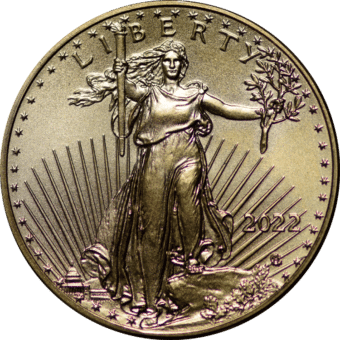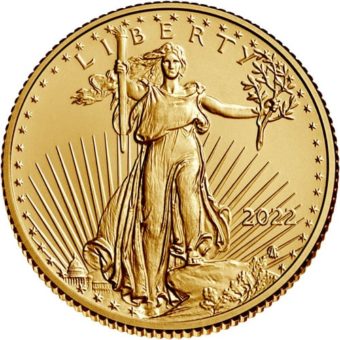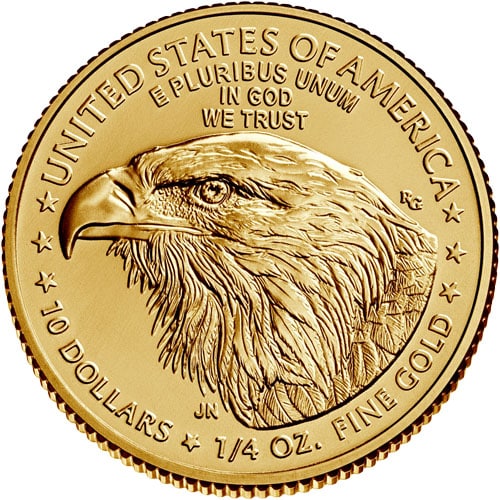


Gold zigzagged all week — dipped to $4,027 Tuesday, barely budged on Wednesday's Fed hold, then jumped back above $4,100 Thursday on cooler inflation data, before fading again Friday morning as the dollar firmed. Net result: still stuck in the same range it's been in for weeks. Next week, the labor market takes over — JOLTS Tuesday, ADP Wednesday, and Friday's jobs report as the one that actually moves the needle.
Monday (7.27.26): Gold $4,075.60 · Silver $58.29. Metals firmed as a weekend pause in U.S.-Iran attacks eased the inflation impulse from the conflict — Brent settled down 6.3% to $85.87 — though positioning stayed cautious ahead of Wednesday's Fed decision, capping gold's upside. Moral: a pause isn't peace, but it's enough to take some heat off the inflation trade.
Tuesday (7.28.26): Gold $4,027.40 · Silver $57.02. Both metals slid as rate-hike odds for Wednesday's decision climbed toward 1-in-3, firming the dollar and lifting yields even as oil and geopolitical risk eased — silver bore the sharper end of the selloff, dropping over 2%. Moral: when the Fed's the risk, a quieter war doesn't buy gold much cover.
Wednesday (7.29.26): Gold $4,043.60 · Silver $57.26. Metals edged higher as the Fed's 9-3 hold — hawkish on paper, with three regional presidents dissenting for a hike — collided with a sharp equity selloff and firm Treasury yields, leaving gold and silver only modestly firmer even as defensive demand stayed in play. Moral: a split vote unsettled stocks more than it moved bullion.
Thursday (7.30.26): Gold $4,107.20 · Silver $59.27. Metals rebounded sharply as softer-than-expected PCE inflation and a weaker dollar helped gold reclaim $4,100 and silver push back toward $59 — a clean reversal of Wednesday's post-Fed pullback, aided by a broad equity rally on strong Microsoft earnings. Moral: one soft inflation print undid what a hawkish Fed vote couldn't.
Friday (7.31.26): Gold $4,057.10 · Silver $57.77 (as of Friday morning)
Gold and silver opened lower as a firmer dollar and elevated Treasury yields near 4.67% pressured metals following Thursday's post-PCE rebound — gold slipped back below the $4,101 breakout level in early trade, with silver following suit. Moral: the dollar showed up early Friday looking to take back what Thursday gave.
Fed Holds, But Three Governors Just Said "Not Yet"
The big picture
Chair Warsh got his hold Wednesday — but not the unanimous vote a "hold" usually implies, and gold noticed.
Driving the news
- The FOMC voted 9-3 to keep rates at 3.50%–3.75%, the fifth straight meeting without a change.
- Cleveland's Hammack, Minneapolis's Kashkari, and Dallas's Logan all dissented in favor of a 25bp hike.
- Warsh reiterated in his press conference that the Fed has no implicit tolerance for inflation above 2% and won't hesitate to tighten further if needed.
- Gold rallied roughly 2% intraday on the decision, touching $4,116 before fading back to close at $4,043.60 as the initial reaction gave way to a broader equity selloff.
Why it matters
A 9-3 vote isn't a consensus hold — it's three regional presidents on record saying rates should already be higher, which keeps a September hike very much alive rather than off the table.
What to watch
Whether Thursday's PCE, GDP, and claims data strengthen the hawks' hand before the September meeting, or give Warsh room to argue the hold was correct.
The bottom line
Moral: three dissents is the Fed's way of saying "we agreed to disagree, loudly."
Thursday's Data Dump Gave Gold Almost Everything It Wanted
The big picture
GDP, PCE, and jobless claims all landed in the same eight-thirty window Thursday morning — and nearly all of them leaned dovish.
Driving the news
- Q2 GDP grew just 1.5% annualized, well below the 2.1% economists expected and a sharp deceleration from Q1's 2.1%.
- June core PCE — the Fed's preferred gauge — eased to 3.3% year-over-year from May's 3.4%; headline PCE cooled to 3.7% from 4.1%.
- Weekly jobless claims ticked up to 197K, still historically low but a step off the 57-year-low 187K print from two weeks prior.
- The GDP miss was driven by a downturn in government spending and decelerating investment and exports, partly offset by firmer consumer spending.
Why it matters
A growth miss plus cooling inflation is close to gold's ideal macro combination — it undercuts the hawkish case Hammack, Kashkari, and Logan made just a day earlier, and real yields fell on the news.
What to watch
Whether next week's ISM, JOLTS, ADP, and the July jobs report confirm the slowdown or complicate it — a hot labor print would muddy this dovish narrative fast.
The bottom line
Moral: the Fed held its ground Wednesday, and the data spent Thursday trying to talk it out of that decision.
Iran's War Just Reached Egypt
The big picture
Five months in, a conflict that was supposed to be over in weeks pulled in its first new country this week — and it's one that sits on a major energy chokepoint of its own.
Driving the news
- A drone strike hit Egypt's Damietta port Wednesday, damaging two LNG vessels and sparking a fire — the first time Egypt has been targeted since the war began.
- The same day, the US carried out a fresh "heavy wave" of strikes on Iran, retaliating for an Iranian attack on US forces, while US-Saudi strikes also hit Iranian-linked targets in Iraq.
- Houthi forces in Yemen are now threatening to blockade shipping to Saudi Arabia through the Red Sea, on top of Iran's existing pressure on the Strait of Hormuz.
- Brent crude climbed above $92 on the news, and US strategic petroleum reserves have fallen for an 18th straight week to their lowest level since 1983.
Why it matters
Every new country and chokepoint pulled into this war adds a fresh source of supply-disruption risk — and a war that keeps geographically widening is a very different setup for oil (and gold's inflation-hedge case) than one that's simply dragging on in place.
What to watch
Whether Egypt's involvement stays limited to this one strike or triggers a broader response from Cairo, and whether the Houthi blockade threat against Saudi Arabia materializes into an actual disruption.
The bottom line
Moral: wars don't stay in their lane forever, and this one just merged onto a new highway.
Silver's Sixth Straight Deficit Year Is Quietly the Bigger Story
The big picture
While gold grabbed the Fed headlines, silver did the more interesting thing — surging nearly 5% into Wednesday's decision on a structural story that has nothing to do with interest rates.
Driving the news
- The Silver Institute's 2026 World Silver Survey projects a sixth consecutive annual supply deficit, with demand outpacing supply by roughly 46.3 million ounces this year.
- Silver jumped almost 5% on Tuesday alone, well outpacing gold's move on the same day.
- The deficit is being driven by persistent industrial and solar demand even as speculative retail positioning has cooled sharply from January's highs.
- Unlike gold, silver's structural floor comes from physical supply-demand math rather than monetary policy expectations.
Why it matters
A genuine, multi-year supply deficit is a different kind of tailwind than a rate call — it doesn't unwind if the Fed turns hawkish, which is part of why silver's move this week outran gold's.
What to watch
Whether the deficit narrative holds up against any further demand cooling out of China's solar sector, which has been one of the swing factors in recent silver-supply models.
The bottom line
Moral: gold trades the Fed's mood; silver's just doing the math.
Central Banks Aren't Waiting for the Fed to Make Up Its Mind
The big picture
While Wall Street parsed Warsh's press conference for clues, central banks kept doing what they've done all year: buying gold, meeting or no meeting.
Driving the news
- Central banks bought a net 244 tonnes of gold in Q1 2026 alone.
- China has continued adding to its reserves through June.
- Poland, Kazakhstan, and Uzbekistan have also been active buyers this year.
- The buying has continued through both the Iran war's escalations and this week's Fed uncertainty, largely undisturbed by either.
Why it matters
Central bank demand has been one of the steadiest legs of the gold bull case precisely because it doesn't react to a single Fed meeting or data print — it's the structural buyer underneath all the week-to-week noise.
What to watch
Whether Q2 buying data, expected in the coming weeks, shows the pace holding, accelerating, or cooling off from Q1's clip.
The bottom line
Moral: central banks don't watch CNBC on Fed day — they just keep buying.
—--
ECONOMIC CALENDAR
Monday, Aug. 3
- 9:45 am — US Manufacturing PMI (Jul.) — prior: 53.9
- 10:00 am — ISM Report On Business Manufacturing PMI (Jul.) — prior: 53.3%
Tuesday, Aug. 4
- 10:00 am — Job Openings & Labor Turnover Survey (Jun.) — prior: 7.6M
Wednesday, Aug. 5
- 8:15 am — ADP National Employment Report (Jul.) — prior: 98K
- 9:45 am — US Services PMI (Jul.) — prior: 51.2
- 10:00 am — ISM Report On Business Services PMI (Jul.) — prior: 54.0%
Thursday, Aug. 6
- 8:30 am — Weekly Jobless Claims (Aug. 1) — prior: 197K
Friday, Aug. 7
- 8:30 am — Jobs Report (Jul.) — prior: 57K (unemployment rate: 4.2%)
A couple of notes on the links:
- Weekly Jobless Claims points to the DOL's standing weekly release PDF, evergreen as before.
- PMI (S&P Global), ISM Manufacturing/Services, JOLTS, ADP, and the Jobs Report all link to their standing report/topic homepages rather than a specific release, since next week's individual pages don't exist yet — those become the correct destinations once each report drops.
IMPACT ON METALS MARKETS
US Manufacturing PMI (S&P Global)
- Reading rises / confirms strength = factory activity holding up despite tariffs and oil = mild headwind for gold.
- Reading falls further = manufacturing cracking under cost pressure = tailwind for metals.
July's flash reading already ticked down to 53.8 from June's 53.9, a four-month low, as production and new orders both cooled even while input costs hit a 14-month high — a stagflation-flavored mix. This final print (plus revisions) confirms whether that softening is real. Low to moderate impact.
ISM Manufacturing PMI
- Reading rises = factory sentiment stabilizing, less urgency for the Fed to act dovish = mild headwind for gold.
- Reading falls / slips toward 50 = manufacturing losing momentum, tariff and oil-cost drag showing up in the hard data = tailwind for metals.
June's reading eased to 53.3 from 54.0, a sixth straight month of expansion but with prices paid still elevated and employment stuck in contraction for a 33rd straight month. A further slide would reinforce the "growth cracking under cost pressure" narrative. Moderate impact.
JOLTS (Job Openings)
- Openings rise or hold steady = labor demand still resilient, Fed patient = mild headwind for gold.
- Openings fall meaningfully = hiring appetite cooling, labor slack building = tailwind for metals.
May's openings were unchanged at 7.6 million, beating expectations, but the quits rate has sat at or below 2% for nearly a year — workers aren't confident enough to jump ship even with headline openings healthy. June's read is the next test of whether that quiet-but-stuck dynamic is holding. Low to moderate impact.
ADP National Employment Report
- Reading beats expectations = private hiring reaccelerating, Fed under less pressure = mild headwind for gold.
- Reading misses / stays soft = hiring pipeline drying up ahead of Friday's official report = tailwind for metals.
June's ADP print came in at just 98K, below May's 122K and well under the 113K forecast, and ADP's own weekly Pulse data has shown hiring decelerating for three straight weeks into July. A soft July number would set up Friday's Jobs Report for a similarly weak read. Moderate impact — also functions as the Friday preview.
US Services PMI (S&P Global)
- Reading holds near an 8-month high = consumer-facing economy still carrying growth, Fed comfortable holding = mild headwind for gold.
- Reading rolls over = the one sector propping up growth loses steam = tailwind for metals.
Services was the standout of July's flash data, jumping to 53.6 from June's 51.2, boosted by World Cup and holiday spending — a seasonal tailwind unlikely to repeat. This final print shows whether services growth holds without it. Low to moderate impact.
ISM Services PMI
- Reading holds above 54 = the dominant share of the economy still expanding solidly = mild headwind for gold.
- Reading drops toward 50 = broader economy losing its main growth engine = tailwind for metals.
June's reading eased to 54.0% from 54.5%, still a 24th straight month of expansion, though the Prices index eased to 67.7%. Employment jumped the most since 2024 — a genuinely strong internal detail worth watching for confirmation. Moderate impact.
Weekly Jobless Claims
- Claims rising = labor cracks widening, especially after several ultra-low prints = good for metals.
- Claims falling back toward the 1969-low levels seen in July = labor market re-tightening = mild drag on metals.
Claims have been volatile the past two weeks — 187K on July 18 (a 57-year low) jumped to 197K for the week of July 25. Whether that's noise or the start of a trend reversal off the floor is the thing to watch here. Moderate impact.
Jobs Report (July)
- Reading beats expectations = labor market resilient, hike odds stay alive = mild headwind for gold.
- Reading misses badly (again) = confirms June's 57K wasn't a one-off, cements the "labor market is cracking" case = strong tailwind for metals.
June's report was a genuine warning sign — just 57K jobs added, less than half the three-month average, with April and May combined revised down by 74,000 more. Unemployment ticked down to 4.2%, but mostly on falling labor-force participation rather than strength. A second consecutive weak print in July would be the clearest signal yet that the Fed's "higher for longer" posture is running into a deteriorating labor market. This is the single highest-impact release of the week.