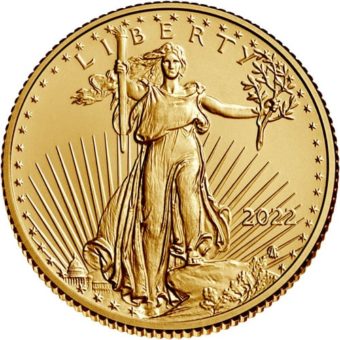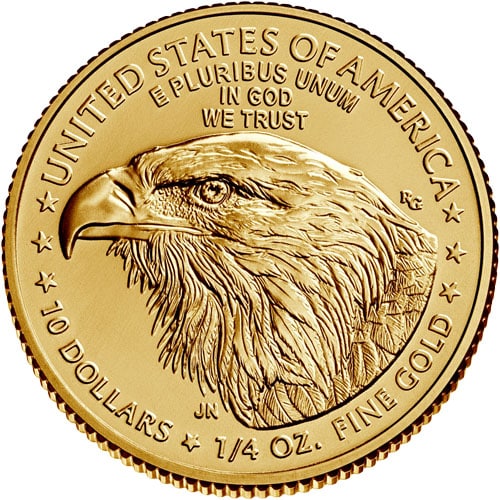


Gold and silver are heading into a pivotal moment after a volatile week, with the jobs report shaping precious metals outlook now firmly in focus. Early-week selling driven by a stronger dollar, rising yields, and weak technicals gave way to a late rebound as buyers stepped back in, but the bigger question remains unresolved: whether resilient labor data will reinforce higher-for-longer rate expectations or signal cracks in the economy. With inflation still sticky, central banks divided, and geopolitical risks simmering, Friday’s employment report could be the catalyst that determines whether metals extend their recovery—or slip back under pressure.
Market Recap: Gold and Silver Slide Early as Dollar and Yields Surge
Monday (4.27.26): Gold and silver kicked off the week lower as weak charts and short-term selling set the tone—June gold slipped $24 to $4,717, while May silver fell $0.80 to $75.60. Traders are juggling geopolitics (Iran proposing a Strait of Hormuz ceasefire deal) and a packed week of central bank decisions, with the Federal Reserve and other Group of Seven banks expected to hold rates steady while watching energy-driven inflation risks. Meanwhile, leadership drama is brewing: Jerome Powell could be nearing his final meeting as Fed chair, with Kevin Warsh positioned as his likely successor.
Tuesday (4.28.26): Gold and silver got hit hard Tuesday as a stronger dollar and rising Treasury yields pushed traders to the exits—June gold dropped $107 to $4,586, while May silver slid $2.25 to $72.78, with weak technicals inviting short-term bears. All eyes are on the Federal Open Market Committee, which kicked off its meeting with expectations that the Federal Reserve—along with other Group of Seven central banks—will hold rates steady, keeping pressure on non-yielding metals for now.
Wednesday (4.29.26): Gold and silver slipped Wednesday ahead of the Federal Open Market Committee decision, with higher bond yields and sticky inflation dulling demand—June gold fell $36 to $4,572, and May silver dropped $1.62 to $71.59. The Federal Reserve is expected to hold rates steady again, but uncertainty around inflation and rising oil keeps pressure on non-yielding metals. One twist: central banks are buying the dip—net purchases hit 244 tons in Q1 (per the World Gold Council), suggesting big players are quietly stepping in while traders stay cautious.
Thursday (4.30.26): Gold and silver popped Thursday midday as the weaker dollar pulled buyers back in—June gold jumped $67 to $4,629, while May silver added $1.65 to $73.16. The macro backdrop? A mixed signal: GDP came in softer than expected at 2%, but jobless claims dropped to their lowest level since 1969, basically canceling each other out. Meanwhile, the Federal Reserve held rates steady—but the real story is the growing split among officials, with multiple dissents and uncertainty tied to Middle East tensions, keeping metals traders on edge and opportunistic.
Friday (5.01.26): Gold slipped, silver flexed—and traders are stuck in “wait-and-see” mode. As of early Friday, gold dipped about 0.5% to ~$4,594 while silver climbed over 1% to ~$74.50, with a softer dollar and easing Treasury yields offering a bit of support—but not enough to spark a breakout. Why the hesitation? Markets are juggling a packed data slate (manufacturing PMIs drop this morning) and a reality check from central banks: the Fed, ECB, and BOE all hit pause this week and basically said, “rate cuts might take longer.” Add in stubborn inflation and oil prices staying hot—thanks in part to U.S.-Iran tensions—and you’ve got a push-pull setup: metals are supported underneath, but capped on top. Translation: the macro tug-of-war isn’t over, and neither is the chop.
—
Inflation stays sticky as Fed’s key gauge runs hot
The big picture
Inflation remains stubbornly above target, reinforcing the idea that price pressures are not cooling fast enough for policymakers’ comfort.
Driving the news
The Commerce Department reported that March PCE—the Federal Reserve’s preferred inflation gauge—came in hot, with both headline and core readings holding above expectations for a 2% target environment.
By the numbers
• +0.7% — monthly headline PCE increase
• 3.5% — year-over-year headline PCE (highest in ~3 years)
• +0.3% — monthly core PCE increase
• 3.2% — year-over-year core PCE
• 3.6% — personal savings rate (down from 5%+ last year)
Why it matters
Persistent inflation—especially in goods and energy—keeps pressure on consumers and limits the Fed’s ability to cut rates, raising the risk of prolonged tight financial conditions.
What to watch
• Future PCE and CPI inflation readings
• Energy prices feeding into goods inflation
• Consumer spending trends and savings rate declines
• Labor market resilience vs. slowing consumption
• Fed policy signals amid sticky inflation
The bottom line
Inflation isn’t breaking yet—until it does, the path to rate cuts stays uncertain, and the pressure on both consumers and markets likely continues.
—
Silver’s $258 upside? Inventory squeeze fuels bullish case
The big picture
Silver is being framed as a high-beta play on hard assets, with tightening supply conditions potentially setting the stage for an explosive move higher.
Driving the news
Analysts point to collapsing COMEX silver inventories and a shifting Silver-to-Gold Ratio as signals that a supply squeeze could drive prices sharply higher in a continued metals bull market.
By the numbers
• 62.21 — current silver-to-gold ratio (oz silver per oz gold)
• <40 — prior bull market compression level (2011)
• <20 — extreme level seen in 1980 peak
• $258 — implied silver price under extreme ratio compression scenario
Why it matters
If silver supply tightens while gold remains strong, the ratio could compress sharply—historically leading to outsized gains in silver relative to gold.
What to watch
• COMEX silver inventory levels
• Movement in the silver-to-gold ratio
• Broader commodity rotation trends
• Gold price trajectory (anchor for ratio moves)
• Signs of physical silver scarcity
The bottom line
Silver’s bullish case hinges on scarcity—if inventories keep falling and the ratio compresses, the metal could see a sharp, leveraged move higher.
—
Gold’s path to $8,000? De-dollarization trade gains traction
The big picture
Gold is increasingly being viewed as a long-term winner in a shifting global system, where countries are steadily reducing reliance on the U.S. dollar and building up gold reserves instead.
Driving the news
Deutsche Bank says central banks—especially in emerging markets—are accelerating gold purchases as protection against sanctions and geopolitical risk, broadening beyond major buyers like China and Russia to a wider group of nations.
By the numbers
• 225M oz — gold added to central bank reserves since 2008
• ~60% → ~40% — decline in U.S. dollar share of reserves
• 30% → 40% — potential rise in gold’s share of reserves
• $8,000 — projected gold price in a bullish scenario (~80% upside)
Why it matters
A sustained shift away from the dollar signals deeper fractures in the global financial system—if trust in U.S. assets erodes further, gold could become the primary hedge against systemic risk.
What to watch
• Central bank buying trends across emerging markets
• Acceleration of global de-dollarization
• Geopolitical tensions and sanctions risk
• Shifts in reserve allocations away from USD
• Gold price reaction during periods of crisis
The bottom line
Gold’s recent pullback may mask a bigger structural move—if de-dollarization continues, the metal could be setting up for a major long-term repricing.
—-
“Bond crisis” warning: debt risks quietly building
The big picture
Rising global debt is becoming a systemic risk, with concerns that markets—not policymakers—may ultimately force a painful adjustment.
Driving the news
Jamie Dimon of JPMorgan Chase warned that current debt trends could trigger “some kind of bond crisis,” pointing to a dangerous mix of deficits, geopolitics, and energy pressures.
By the numbers
• $1.7T — size of private credit market
• 2022 — recent U.K. gilt crisis as a stress example
• “Some kind of crisis” — Dimon’s outlook on bond markets
• Multi-factor risk — debt + oil + geopolitics + deficits
Why it matters
A bond crisis could mean surging yields, collapsing liquidity, and forced intervention by central banks—spilling over into equities, credit markets, and the broader economy.
What to watch
• Government debt levels and deficit trends
• Bond yield spikes and liquidity conditions
• Central bank intervention signals
• Credit cycle deterioration
• Geopolitical and energy-driven shocks
The bottom line
The risk isn’t just rising debt—it’s the timing—if policymakers don’t act early, markets could trigger a disorderly reset with far-reaching consequences.
—
Key Economic Events That Could Move Metals Next Week
Economic Calendar: May 4 – May 8, 2026 (ET)
MONDAY, MAY 4
• 12:50 pm — New York Fed President John Williams speech
TUESDAY, MAY 5
• 10:00 am — JOLTS report (March)
• 10:00 am — New home sales* (Feb., delayed report)
• 10:00 am — New home sales (March)
• 10:00 am — ISM services (April)
WEDNESDAY, MAY 6
• 8:15 am — ADP employment (April)
• 1:00 pm — Chicago Fed President Austan Goolsbee speech
THURSDAY, MAY 7
• 8:30 am — Initial jobless claims (May 2)
• 3:00 pm — Consumer credit (March)
• 3:30 pm — New York Fed President John Williams speech
FRIDAY, MAY 8
• 8:30 am — Employment Situation Summary (Jobs Report) (April)
• 10:00 am — Consumer sentiment (prelim) (May)
• 7:30 pm — Panel: Austan Goolsbee, Mary Daly, Michelle Bowman, Christopher Waller
IMPACT ON PRECIOUS METALS MARKETS
New York Fed President John Williams Speech (Mon, 12:50 pm ET)
• Hawkish tone → signals tighter policy outlook; bearish for gold/silver.
• Dovish tone → suggests caution or easing bias; bullish for metals.
Fed speakers shape expectations for future policy; moderate impact.
JOLTS Report (Tue, 10:00 am ET)
• Strong job openings → indicates labor market strength; bearish for gold/silver.
• Weak openings → suggests cooling labor demand; bullish for metals.
Labor demand is a key input into Fed policy decisions; high impact.
New Home Sales (Tue, 10:00 am ET)
• Strong sales → reflect economic resilience; mildly bearish for gold/silver.
• Weak sales → signal housing slowdown; mildly bullish for metals.
Housing data offers insight into consumer strength and interest-rate sensitivity; moderate impact.
ISM Services (Tue, 10:00 am ET)
• Strong reading → signals economic expansion; bearish for gold/silver.
• Weak reading → raises concerns about slowing growth; bullish for metals.
Services dominate the U.S. economy, making this a closely watched indicator; high impact.
ADP Employment (Wed, 8:15 am ET)
• Strong payroll growth → signals labor strength; bearish for gold/silver.
• Weak payroll growth → hints at economic softness; bullish for metals.
Often seen as a preview of the official jobs report; moderate impact.
Chicago Fed President Austan Goolsbee Speech (Wed, 1:00 pm ET)
• Hawkish messaging → reinforces tightening expectations; bearish for gold/silver.
• Dovish messaging → signals potential easing; bullish for metals.
Fed rhetoric can shift market expectations quickly; moderate impact.
Initial Jobless Claims (Thu, 8:30 am ET)
• Rising claims → signals labor market softening; bullish for metals.
• Falling claims → indicates continued strength; mildly bearish for gold/silver.
High-frequency labor data helps gauge economic momentum; moderate impact.
Consumer Credit (Thu, 3:00 pm ET)
• Rising credit → signals consumer confidence and spending; bearish for gold/silver.
• Falling credit → suggests caution and tightening conditions; bullish for metals.
Consumer borrowing trends reflect underlying economic health; moderate impact.
New York Fed President John Williams Speech (Thu, 3:30 pm ET)
• Hawkish tone → supports higher rates outlook; bearish for gold/silver.
• Dovish tone → signals policy flexibility; bullish for metals.
Repeated messaging can reinforce or shift market narratives; moderate impact.
Employment Situation Summary (Fri, 8:30 am ET)
• Strong job growth → signals economic strength; bearish for gold/silver.
• Weak job growth → raises recession concerns; bullish for metals.
The most important labor report of the month; very high impact.
Consumer Sentiment (Fri, 10:00 am ET)
• Higher sentiment → reflects economic confidence; bearish for gold/silver.
• Lower sentiment → signals uncertainty; bullish for metals.
Consumer outlook influences spending and growth expectations; moderate impact.
Fed Panel (Fri, 7:30 pm ET)
• Hawkish consensus → reinforces tightening narrative; bearish for gold/silver.
• Dovish consensus → suggests easing bias; bullish for metals.
Multiple Fed voices can amplify or contradict policy expectations; high impact.